

.webp)

.svg)
The best rank tracking tools for accuracy, AI visibility and cost in 2026
Best overall: SE Ranking wins on the combination that matters most this year: daily tracking, AI visibility baked into entry plans, and one of the lowest per-keyword costs in independent comparisons. If accuracy is your single deciding factor, AccuRanker is the specialist agencies trust for on-demand refreshes and audit-ready data. If you manage local or multi-location clients, Nightwatch covers over 107,000 locations with AI visibility layered on top. And if budget is the constraint, Google Search Console paired with a lightweight paid tool gets you most of the way there for free.
You don’t need to read a 40-tool roundup to make this decision well. You need to know which tool fits your actual buyer job, and roughly what it costs per keyword once you’re past the entry tier.
- Agencies needing white-label reports and API access: AccuRanker or Advanced Web Ranking
- High-volume trackers watching thousands of keywords: SE Ranking or SEO PowerSuite’s Rank Tracker
- Local and multi-location businesses: Nightwatch or BrightLocal
- Solo consultants or small budgets: Google Search Console plus Ubersuggest or KeySearch
One 2026 accuracy study testing five tools against real Google data found AccuRanker delivered the highest raw accuracy, while SE Ranking offered the best balance of accuracy and value across most everyday use cases. Start there, run a 10-keyword trial against your own Search Console data, and you’ll know within a week which tool deserves a permanent line in your budget.
Key Takeaways
The most effective rank tracker for most buyers in 2026 combines daily updates, included AI visibility, and a low per-keyword cost, which is why SE Ranking leads this shortlist for value while AccuRanker leads on pure accuracy.
| Point | Details |
|---|---|
| Best overall value | SE Ranking pairs daily tracking with entry-plan AI visibility and one of the lowest published per-keyword costs. |
| Accuracy specialist | AccuRanker delivers the highest accuracy and on-demand refresh, favoured by agencies needing real-time validation. |
| Local tracking leader | Nightwatch covers 107,000+ locations with AI visibility across major large language models. |
| Cost calculation matters | Always divide the monthly fee by your target keyword volume, not the entry-tier allowance, to see real unit economics. |
| Implementation support | Hook Digital configures, dashboards and manages rank tracking setups so the data drives client decisions, not just reports. |
Table of Contents
- Best rank tracking tools compared at a glance
- Nine rank trackers worth trialling this year
- How do you choose the right rank tracker?
- How we evaluated the best rank tracking tools
- Which rank tracker should you actually pick?
- What contract lengths and trial periods should you expect?
- What does full ownership actually cost once you scale up?
- How long does it take to go from trial to full rollout?
- How Hook Digital actually uses rank tracking day to day
- Let Hook Digital set up and manage your rank tracking
- Sources
- FAQ
Best rank tracking tools compared at a glance
Sticker price tells you almost nothing until you know how many keywords it buys. A £50 plan tracking 500 keywords is a very different proposition from a £50 plan tracking 100, so treat per-keyword cost as your real comparison metric, not the headline monthly fee.
The calculation is simple: divide the monthly fee by the plan’s tracked-keyword allowance, and do it at the volume you’ll actually use, not the cheapest entry tier. A technology and marketing comparison found SE Ranking landing around €0.05 per keyword in one entry-plan example, among the cheapest of the tools it tested. Your own number will shift depending on plan tier and add-ons, so use this as a benchmark, not a promise.
| Tool | Best for | Entry price (typical) | Approx. cost per keyword | Update frequency | AI visibility | Local tracking |
|---|---|---|---|---|---|---|
| SE Ranking | Best value with AI visibility included | Entry plans from roughly £35 to £50/month | ~€0.05 (entry plan example) | Daily | Included on entry plan | City-level |
| AccuRanker | Accuracy and on-demand refresh for agencies | Mid-tier, scales with keyword volume | Higher per keyword, reflects accuracy focus | Daily, plus on-demand | Add-on | City-level |
| Nightwatch | Local and multi-location coverage | Entry plans aimed at small teams | Varies by location count | Daily | Included, across major LLMs | 107,000+ locations |
| SEOmonitor | Full top-100 depth and stored snapshots | Positioned for agencies and enterprise | Reflects depth and snapshot storage | Daily, full-depth (DDC) | Included, with stored snapshots | City-level |
| Google Search Console | Free baseline for any site | Free | £0 | Daily (with lag) | None | Limited (query-level only) |
A note on the AI visibility column: coverage varies by which large language models a tool actually crawls and how often. Several 2026 vendor comparisons flag this as the newest fault line between trackers, some bundle ChatGPT, Gemini and Perplexity monitoring into the entry price, others charge extra or skip it entirely. Ask this directly before you buy, because it’s easy to assume every “AI-ready” badge means the same thing.
Nine rank trackers worth trialling this year
Here’s the detail behind the shortlist, covering what each tool actually does well, what it costs, and where it falls short.
1. SE Ranking
SE Ranking is a full SEO platform that happens to include one of the strongest rank trackers on the market, not a bolt-on feature. Its AI Results Tracker ships on the entry plan rather than being locked behind a premium tier, which is unusual among the tools in this list.
Best for: teams that want daily tracking, AI visibility and a low per-keyword cost without needing a dedicated specialist tool.
Pricing shape: entry plans start in the £35 to £50/month range, with a published per-keyword figure around €0.05 in one multi-tool comparison, among the cheapest tested.
- Pro: bundles keyword tracking, site audit, backlink monitoring and AI visibility into one subscription, so you’re not stitching together three tools.
- Con: as an all-in-one platform, its rank tracking interface isn’t as deep or specialist-focused as a dedicated tool like AccuRanker.
SE Ranking is available to UK buyers with no regional restriction.
2. AccuRanker
AccuRanker does one thing and does it with obsessive precision: it tracks rankings, fast and accurately, and gives you on-demand refreshes when a client asks “has it moved yet?” mid-meeting. It’s consistently the pick independent testers reach for when accuracy is non-negotiable.

Best for: agencies that need real-time, audit-ready ranking data for client reporting.
Pricing shape: mid-tier pricing that scales with keyword volume, positioned above budget tools but justified by refresh speed and accuracy.
- Pro: near-instant on-demand refresh means you’re never waiting overnight to confirm a ranking change.
- Con: AI visibility tracking is an add-on rather than a built-in feature, so factor that into your total cost.
AccuRanker serves UK customers directly.
3. Nightwatch
Nightwatch built its reputation on hyper-local coverage, advertising over 107,000 trackable locations alongside AI visibility monitoring across ChatGPT, Gemini, Claude and Perplexity. For anyone managing rankings across multiple towns or franchise locations, that granularity is the whole pitch.

Best for: local SEO specialists and multi-location businesses needing precise geographic tracking.
Pricing shape: entry plans aimed at small teams, scaling with location and keyword count.
- Pro: location granularity that few competitors match, useful if you’re tracking a chain across dozens of towns.
- Con: the sheer depth of local features can feel like overkill if you’re only tracking one site in one city.
Nightwatch is fully accessible to UK-based teams.
4. Semrush
Semrush’s Position Tracking tool sits inside its broader SEO and content marketing suite, which means your ranking data lives next to keyword research, competitor analysis and backlink audits without switching platforms.
Best for: marketers who already use Semrush for keyword research and want rank tracking to plug straight into that workflow.
Pricing shape: bundled into Semrush’s paid subscription tiers rather than sold standalone, so cost depends on which overall plan you’re on.
- Pro: ranking data sits alongside keyword and competitor research, so you can act on a position drop without leaving the platform.
- Con: you’re paying for a broad suite, so if rank tracking is your only need, you’re covering features you won’t touch.
Semrush operates in the UK with local currency billing.
5. Ahrefs
Ahrefs’ rank tracker leans on the same backlink and keyword database that made the platform famous, giving your position data useful context, like whether a drop correlates with a competitor’s new backlink.
Best for: SEOs who want ranking data cross-referenced against backlink and content signals in the same tool.
Pricing shape: included within Ahrefs’ tiered subscriptions, positioned at the premium end of the market.
- Pro: deep integration with Ahrefs’ Site Explorer means you can pivot from a ranking change straight into a backlink investigation.
- Con: entry-level plans cap tracked keywords fairly tightly, so per-keyword cost climbs quickly at scale.
Ahrefs is available and billed in GBP for UK users.
6. Mangools (SERPWatcher)
SERPWatcher is Mangools’ rank tracking module, built with a simpler interface than most competitors and pitched squarely at smaller teams who find enterprise dashboards overwhelming.
Best for: freelancers and small agencies who want clear visuals without a steep learning curve.
Pricing shape: among the more affordable options in this list, with straightforward tiered plans.
- Pro: the interface is genuinely easy to hand to a non-technical client for a quick ranking check.
- Con: lacks the AI visibility and local granularity depth of specialists like Nightwatch or SEOmonitor.
Mangools serves UK customers with no access restrictions.
7. Wincher
Wincher positions itself as an affordable, no-frills tracker for people who want daily updates without paying for features they’ll never use.
Best for: small businesses and solo marketers tracking a modest keyword list on a tight budget.
Pricing shape: budget-tier pricing designed to undercut the bigger all-in-one platforms.
- Pro: straightforward setup, useful if you want to be tracking keywords within minutes of signing up.
- Con: reporting and white-label options are thinner than what agencies typically need for client delivery.
Wincher is available to UK buyers.
8. Advanced Web Ranking
Advanced Web Ranking (AWR) is built for agencies that need heavy customisation: white-label reports, flexible scheduling, and granular control over how data gets presented to clients.
Best for: agencies managing multiple client accounts who need robust white-label reporting.
Pricing shape: scales with account and keyword volume, positioned for professional and agency use rather than solo practitioners.
- Pro: reporting customisation is among the deepest in this category, a genuine advantage for client-facing agencies.
- Con: the depth of configuration options means a longer learning curve than simpler tools like SERPWatcher.
AWR is accessible to UK-based agencies.
9. SEOmonitor
SEOmonitor’s standout feature is Dynamic Depth Crawling, tracking the top 100 results daily rather than a shallow top 10 or 20, and storing SERP and AI snapshots so you can prove what a search result page looked like on any given day.
Best for: teams that need full top-100 depth and an auditable history of both traditional and AI search results.
Pricing shape: positioned for agencies and enterprise clients, priced above budget-tier tools.
- Pro: stored SERP and AI snapshots give you a defensible record when a client questions a ranking claim months later.
- Con: that depth of data comes at a price point that’s hard to justify for a single small site.
SEOmonitor supports UK agencies and clients.
Pro Tip: Don’t judge a tool’s AI visibility feature by its marketing page alone. Ask during your trial exactly which AI platforms it crawls, ChatGPT, Gemini, Perplexity, and how often. Some vendors update AI snapshots daily; others check weekly and call it “AI visibility” all the same.
The remaining tools worth knowing by name, even if they didn’t make the top nine: SERPWatcher (Mangools) and Rank Tracker (SEO PowerSuite) for desktop-based tracking with one-time licence options; Nozzle for enterprise-scale keyword volume; Moz Pro for teams already inside Moz’s domain authority ecosystem; Keyword.com for API-first integrations; Google Search Console as the free, canonical baseline every strategy should start from; StoryChief and Yotpo Discover for content teams tracking rankings alongside publishing workflows; SEO Tester Online and SEO Review Tools for budget-conscious on-page and ranking audits combined; KeySearch and Ubersuggest as low-cost all-rounders; Peec AI and Surfer (AI Tracker) for teams specifically prioritising generative AI visibility; Looker Studio for building custom dashboards on top of exported ranking data; LowFruits for low-competition keyword discovery feeding into tracking lists; Backlinko and KeywordTools.Org as research resources rather than trackers themselves; BrightLocal and Localo for local pack and Google Business Profile tracking; Rankability, PowerSuite, Zutrix, Morningscore and ProRankTracker as smaller-footprint alternatives worth a look if the above don’t quite fit your budget or workflow.
How do you choose the right rank tracker?
Start with update frequency, because it determines how quickly you catch a problem. Daily tracking is the standard for anything client-facing; anything slower and you’re explaining a ranking drop a week after it happened. Depth matters just as much: a tool that only tracks the top 10 or 20 positions misses the story of a page climbing from position 45 to 15, arguably the most useful trend to catch early. SEOmonitor’s top-100 daily crawling exists precisely for this reason.
Local tracking granularity is the next filter. If you manage a single-location business, city-level tracking from most tools will do. If you manage a franchise or multi-location brand, you need the kind of postcode-level or location-count precision Nightwatch and BrightLocal specialise in. Test this directly: pick three of your most geographically sensitive keywords and confirm the tool tracks them at the location resolution you actually need, not just the country or region level.
AI visibility is the newest line item, and it’s worth interrogating rather than assuming. During a trial, run the same query through ChatGPT, Gemini or Perplexity yourself and compare what you see against what the tool reports. If the numbers don’t roughly line up, or the tool only checks weekly, factor that into your decision.
- Check update frequency and depth — confirm daily tracking and at least top-50 (ideally top-100) coverage.
- Test local granularity — track three geographically distinct keywords and confirm resolution.
- Verify AI visibility manually — cross-check the tool’s AI-overview data against a live search yourself.
- Confirm reporting needs — white-label PDFs, scheduled client reports, and API or Looker Studio integration if you need custom dashboards.
- Calculate real per-keyword cost — divide the plan price by your actual keyword volume, not the entry tier.
Reporting needs deserve their own checklist item. If you’re an agency, white-label reports and API access aren’t nice-to-haves, they’re what makes the tool usable at client scale. Per Konabayev’s analysis, Google Search Console remains the sensible free baseline for any site, but it can’t do competitor tracking, precise local checks, or automated client-ready reporting, which is exactly where paid tools earn their fee.
Pro Tip: Bring red flags to the demo, not just questions. Ask what happens to your historical ranking data if you cancel, whether AI visibility is billed separately, and how the vendor defines “daily” (some tools batch-update overnight and call it daily even if the timestamp lags by 12 hours).
How we evaluated the best rank tracking tools
Every tool in this shortlist was assessed against five weighted criteria: accuracy of reported positions, local tracking granularity, AI visibility coverage, per-keyword pricing at realistic volumes, and reporting or integration depth. No single criterion decided a ranking on its own, a tool with perfect accuracy but no AI visibility support still lost ground against one offering a stronger overall package.
Data came from three sources: vendor product pages for feature claims and pricing, independent published comparisons and accuracy studies for real-world performance, and review aggregators such as G2 and Capterra for a sense of common praise and recurring complaints among actual users.
Run this replication test yourself before committing to any tool: pick 10 sample keywords, split across four local queries, three branded or non-branded terms, and three high-variance SERP-feature queries. Request an on-demand refresh if the tool offers one, then cross-check the reported positions against your own Google Search Console data for the same terms. Finally, capture a SERP HTML snapshot and check whether the tool logs an AI-overview appearance for the same query at the same moment.
This mirrors the approach behind the 2026 accuracy study that tested five tools against real Google data, and it takes under an hour to run during any 14-day free trial. Treat AI visibility results as directional rather than exact. Tools differ in how and how often they crawl AI sources, so use snapshots to flag opportunities, not as strict position data.
Which rank tracker should you actually pick?
If you’re an agency juggling multiple client accounts, AccuRanker or Advanced Web Ranking earn their premium through white-label reporting and API access you’ll use weekly. If you’re tracking thousands of keywords and every pound per keyword matters, SE Ranking’s published per-keyword figure makes it the strongest economics in this list, backed by its 2026 comparison data.
- Agency with white-label and API needs: AccuRanker or Advanced Web Ranking
- Highest volume, lowest per-keyword cost: SE Ranking
- Accuracy and on-demand refresh non-negotiable: AccuRanker
- Budget, freelancer or single-site owner: Google Search Console plus Wincher or Ubersuggest
- Local or multi-location specialist: Nightwatch or BrightLocal
Don’t assume you need to pick just one. Plenty of established agencies run an all-in-one platform like SE Ranking for day-to-day client reporting, then layer in AccuRanker for the handful of high-stakes keywords where a client specifically demands on-demand, audit-grade accuracy. That combination costs more than a single subscription, but it solves two different jobs properly instead of one job adequately.
What contract lengths and trial periods should you expect?
Most rank trackers in this category run on monthly rolling contracts, so you’re rarely locked into anything longer than 30 days at a time. Annual billing is common as an option, usually at a meaningful discount, often somewhere between two and three months free compared to paying monthly, but it’s optional rather than mandatory across the tools covered here.
Free trials are the norm rather than the exception. A 14-day trial window is typical across the market, enough time to run the 10-keyword validation test outlined earlier and compare results against your own Search Console data before committing a card. Some tools offer shorter seven-day trials, others extend to a full month for enterprise-tier plans where onboarding takes longer.
Cancellation policies vary more than trial lengths do. Some vendors let you cancel instantly through account settings with no conversation required; others route cancellation through a support ticket or account manager, partly to offer a discount and partly to understand why you’re leaving. Before you commit, check specifically whether your historical ranking data exports cleanly if you cancel, and whether you lose access immediately or retain it until the end of the billing period. This detail rarely appears on pricing pages, so it’s worth asking directly during your trial rather than discovering the answer after cancelling.
What does full ownership actually cost once you scale up?
The advertised entry price is rarely what you end up paying once a tracking programme matures. Keyword volume is the biggest driver: most plans cap tracked keywords at the entry tier, and scaling from 500 to 5,000 keywords often means jumping two or three pricing tiers, not a simple proportional increase.
Add-ons compound the gap further. AI visibility tracking, as covered earlier, is included in some entry plans and sold separately in others, and that difference alone can shift your effective monthly cost by a meaningful margin. White-label reporting, additional user seats, API access, and extra location tracking for local SEO work are all common upsells that don’t appear in the headline price you see on a comparison page.
The practical way to budget is to calculate cost at your target keyword volume, not your current one. If you’re tracking 300 keywords today but expect to be tracking 1,500 within a year, price the tool at 1,500 keywords now, because the tool that looks cheapest at your current volume isn’t necessarily the cheapest at the volume you’re growing into. Factor in reporting and AI visibility add-ons as a fixed percentage uplift, typically somewhere in the 10 to 30% range depending on the vendor, and you’ll have a far more honest total cost of ownership than the number on the pricing page.
How long does it take to go from trial to full rollout?
A realistic timeline runs in three phases. The first week is trial and validation: setting up your keyword list, running the 10-keyword accuracy test against Search Console, and checking local granularity and AI visibility against a handful of real queries. Most buyers can make a confident go or no-go decision within this first week if they run the test deliberately rather than just watching the dashboard passively.
Weeks two and three typically cover configuration: importing your full keyword list, setting up competitor tracking, building out location groups if you need local granularity, and configuring white-label report templates if you’re an agency. This is also when integrations get wired up, connecting the tracker to Looker Studio, Google Search Console, or an internal reporting stack via API.
By week four, most teams have moved into steady-state reporting, with scheduled client reports flowing automatically and the tool embedded in weekly or monthly review cycles. Larger agencies managing dozens of client accounts sometimes stretch full deployment to six or eight weeks simply because there are more accounts to migrate and more report templates to standardise. A solo consultant tracking one site can realistically go from signup to fully operational inside a single week.
How Hook Digital actually uses rank tracking day to day
We don’t treat rank tracking as a reporting afterthought bolted onto a client account after the contract is signed. It’s one of the first tools we configure, usually before the first strategy call ends, because a client’s current ranking baseline shapes almost every recommendation that follows.
Whether we buy a dedicated platform or lean on a client’s existing Search Console setup depends entirely on scope. For a single-location Oxfordshire business, Search Console data combined with a lighter tracking layer is often genuinely enough. For a client running multi-location local campaigns or competing in a crowded national market, we bring in dedicated tracking with proper local granularity from week one.
Our implementation follows the same shape every time: audit the current ranking picture, configure keyword groups against real business priorities rather than vanity terms, build a dashboard the client can actually read without a translation call, and set a reporting cadence tied to their agreed service level. That ranking data then feeds straight into monthly demand generation priorities, and in retainer accounts, it’s often the evidence base we point to when discussing scope changes or budget reallocation.
— Hook
Let Hook Digital set up and manage your rank tracking
Choosing a tool is only half the job. Configuring it properly, integrating it with your existing reporting, and turning ranking movement into decisions your business can act on is the harder half, and it’s where most in-house teams run short on time. Hook Digital handles the setup, dashboarding and ongoing management so your ranking data actually gets used, not just watched.
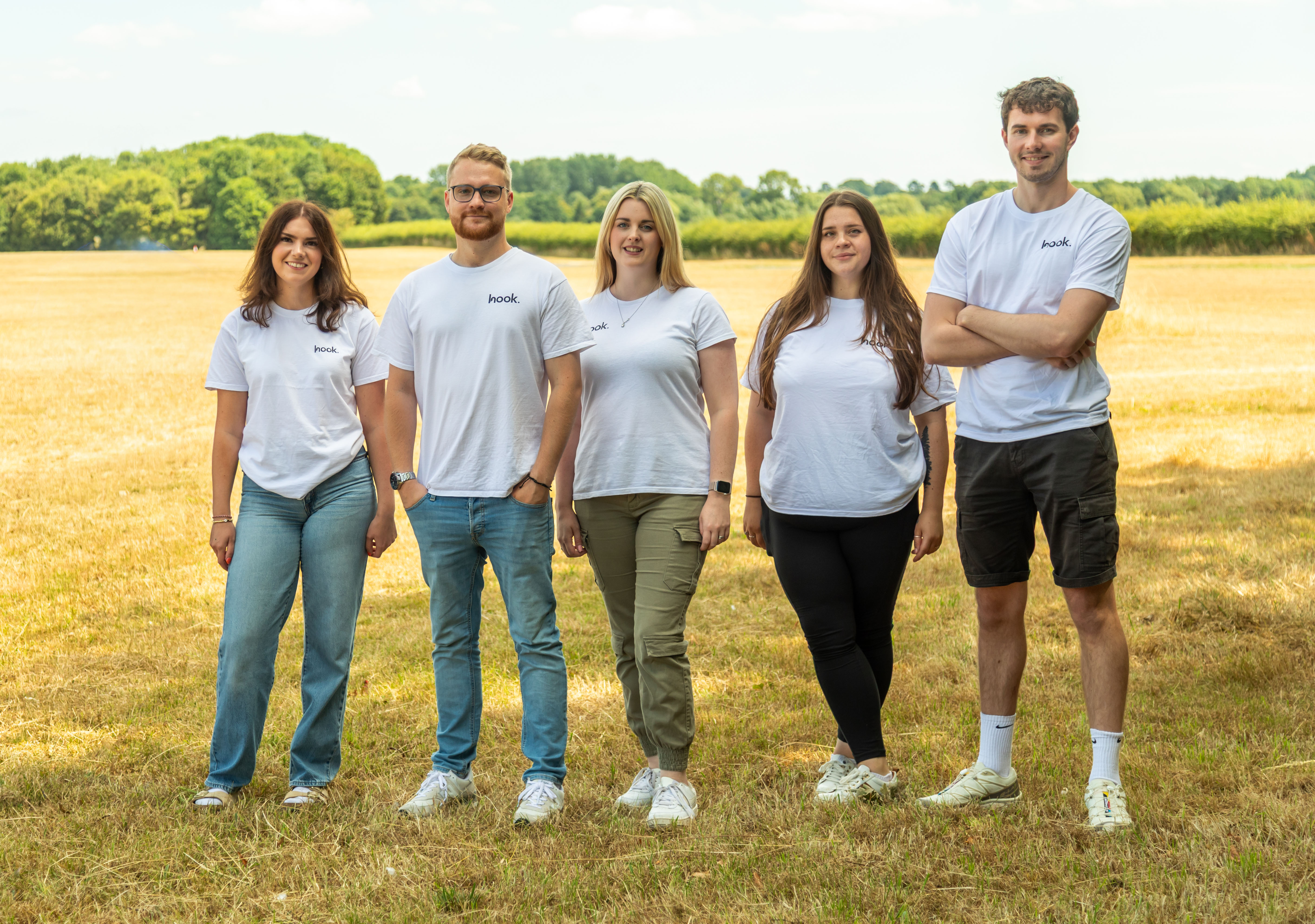
We start with an audit of your current visibility, then match you to the right tracking setup for your situation, whether that’s an all-in-one platform for daily reporting or a dedicated tracker layered in for accuracy-critical keywords. From there, we build dashboards your team can read at a glance, wire up the integrations you need, and fold the reporting cadence into your wider SEO and marketing work rather than leaving it as a separate spreadsheet nobody checks. If your rankings sit alongside a site that needs technical work too, our website design and development team can handle both under one roof, which is one less agency to coordinate.
If you’d rather have someone else own the setup, configuration and monthly reporting, get in touch through our branding and design services page to book a consultation and we’ll map out what a properly configured tracking setup looks like for your business.
FAQ
What are the top rank tracking tools right now?
SE Ranking, AccuRanker, Nightwatch and SEOmonitor lead this category for 2026, each excelling in a different area: value and AI visibility, pure accuracy, local granularity, and full-depth daily crawling respectively.
What is the best free tool for tracking rankings?
Google Search Console is the standard free baseline, giving you accurate first-party data on your own site’s rankings, though it can’t track competitors or offer the local precision paid tools provide.
What is the best app for tracking keyword rankings?
There’s no single “best app” for every situation. SE Ranking suits most buyers looking for value and included AI visibility, while AccuRanker suits agencies that need on-demand, audit-grade accuracy.
How much does a good rank tracker cost per keyword?
Per-keyword cost varies widely by plan and volume, but one 2026 comparison found SE Ranking’s entry plan landing around €0.05 per keyword, among the cheapest tested at that tier.
How often should rank tracking update?
Daily updates are the standard for any client-facing or competitive tracking programme; on-demand refresh, offered by tools like AccuRanker, adds the ability to verify a ranking change the moment it happens rather than waiting overnight.
What are the most important SEO ranking factors to track alongside position?
Beyond raw position, track SERP feature ownership (featured snippets, local packs), search intent match, and increasingly, AI-overview visibility, since these shape actual click-through more than position alone.
Recommended
- Marketing Trends to Watch in February 2026 | Hook Digital - Oxford’s Premier Full-Service Marketing Agency
- Marketing tools for small business owners: 2026 guide | Hook Digital - Oxford’s Premier Full-Service Marketing Agency
- How AI can revolutionise social media and marketing for small businesses | Hook Digital - Oxford’s Premier Full-Service Marketing Agency
- Marketing agency evaluation checklist: 2026 guide | Hook Digital - Oxford’s Premier Full-Service Marketing Agency
.png)


