
.webp)

.svg)
Paid social advertising explained for business owners

Paid social advertising is the practice of paying social media platforms to deliver targeted adverts directly to defined audiences, bypassing the slow build of organic reach entirely. Unlike posting content and hoping it lands, paid social guarantees distribution. Global social media platforms now reach over 5.79 billion user identities, roughly 69.9% of the world’s population. That scale makes paid social one of the most direct routes to your customers available today. Platforms including Meta, TikTok, and LinkedIn each offer distinct targeting methods, cost structures, and ad formats, and understanding how they differ is the first step to spending wisely.
How does paid social advertising work?
Paid social advertising works through a real-time auction system that runs every time a user loads their feed. You set a budget, choose an objective, and define your audience. The platform then enters your ad into an auction against other advertisers competing for the same eyeballs.
The auction winner is not simply the highest bidder. Ad auctions are decided by a combination of your campaign objective, budget, duration, and how relevant your creative is to the audience you are targeting. A well-crafted ad from a modest budget can outperform a poorly made ad with a large spend. This is why creative quality matters as much as budget size.
Audience targeting is where paid social becomes genuinely powerful. Platforms let you reach people by:
- Demographics: age, gender, location, language
- Interests and behaviours: pages followed, content engaged with, purchase history
- Lookalike audiences: people who share traits with your existing customers
- Retargeting: people who have already visited your website or engaged with your content
Platform algorithms, including AI-driven tools like Meta’s Advantage+ and TikTok Smart Campaigns, increasingly automate audience decisions. That shift means creative variation is now the highest-leverage activity for paid social success, because the algorithm handles much of the targeting work for you.
Cost metrics you will encounter include CPM (cost per thousand impressions), CPC (cost per click), and CPA (cost per acquisition). Typical CPMs range from £5 to £30 depending on platform, audience, and competition. Paid social also delivers results the same day a campaign goes live, compared to organic social which can take months or years to compound meaningful reach.

What are the main paid social ad formats and platforms?
Ad formats vary by platform, but the most widely used types across paid social are:
- Image ads: single static visuals, best for direct response and brand awareness
- Video ads: short or long form, effective for storytelling and product demonstration
- Carousel ads: multiple images or videos in one unit, useful for showcasing product ranges
- Story ads: full-screen vertical formats on Instagram, Facebook, TikTok, and Snapchat
- Shopping ads: product catalogue formats that link directly to purchase pages
- Lead generation ads: in-platform forms that capture contact details without sending users to a website
Choosing the right platform depends on your business type, audience demographics, and campaign goal. The table below outlines the key differences.
| Platform | Strengths | Typical CPM | Best for |
|---|---|---|---|
| Meta (Facebook & Instagram) | Scale, retargeting, broad demographics | £8–£25 | Most business types |
| TikTok | Creative reach, younger audiences, top-funnel awareness | £3–£10 | Consumer brands, awareness |
| Professional targeting, B2B decision-makers | £25–£75 | B2B, recruitment, high-value services | |
| YouTube | Long-form video, intent-based discovery | Varies | Brand storytelling, education |
| Purchase-intent audiences, visual products | Varies | Retail, home, lifestyle | |
| Niche communities, high-intent users | Varies | Tech, gaming, specialist products |

TikTok ads outperform Meta for top-of-funnel awareness in 60% of consumer brands. That does not make TikTok the default choice. Meta remains the strongest platform for scale and retargeting, LinkedIn is the clear choice for B2B, and Reddit delivers strong results when you need to reach a specific niche with genuine purchase intent.
You can read more about social media ad formats to understand which creative units suit your specific campaign goals.
How to build an effective paid social strategy
A paid social strategy that actually works follows five clear steps. Skipping any one of them is where most campaigns go wrong.
- Define your objective. Choose from awareness, traffic, engagement, leads, or conversions. The objective you select determines how the platform optimises your spend, so picking the wrong one wastes budget from day one.
- Select your platform. Match the platform to your audience and goal, not to where you personally spend time. A B2B software company belongs on LinkedIn. A fashion brand belongs on Instagram and TikTok.
- Build your audience. Start with interest and demographic targeting, then layer in retargeting and lookalike audiences as you gather data. Audience segmentation methods are worth understanding before you spend a penny.
- Produce your creative. Your ad creative is the single biggest variable in campaign performance. Produce multiple variations of copy, imagery, and video from the start. Test them against each other and replace underperformers regularly.
- Measure performance using server-side tracking. The 5-step campaign framework now includes Conversions API (CAPI) as standard, replacing the older pixel-based tracking that became unreliable after browser privacy changes.
Pro Tip: Test your creative ideas organically first. Post variations as regular content, see which formats generate the most engagement, then put paid budget behind the winners. This approach reduces wasted spend and produces ads that already have social proof.
On budgeting, early-stage businesses should plan for a minimum of £500–£2,000 per platform per month for initial validation. Growth-stage businesses can allocate 10–30% of revenue to paid social spend. Spreading a tiny budget across five platforms produces nothing useful. Concentrate spend on one or two platforms until you have clear data.
Paid and organic social work best when they are integrated, not siloed. Combining organic and paid into a single content strategy means your paid ads reinforce what your audience already sees from you organically, building familiarity and trust at the same time.
Paid campaigns that fail almost always share the same problems: the unit economics do not support the customer acquisition cost, creative production stops after the first week, or paid and organic are treated as entirely separate activities. Avoid all three.
How to measure success in paid social campaigns
Measurement is where most business owners lose confidence, and where most agencies quietly underperform. The metrics that matter depend on where in the funnel you are running activity.
At the top of the funnel, track CPM and click-through rate (CTR). In the middle, track CPC and cost per lead. At the bottom, track cost per acquisition (CPA), return on ad spend (ROAS), and customer acquisition cost (CAC). Over time, lifetime value (LTV) tells you whether the customers you are acquiring are actually worth the cost.
Platform-reported ROAS is no longer reliable as a standalone measure. Platforms have a natural incentive to attribute as much revenue as possible to their own ads. Most serious advertisers now use server-side tracking via Conversions API alongside incrementality testing to get an accurate picture.
Pro Tip: Run a geo holdout test. Switch off paid social in one region for two to four weeks while keeping it running elsewhere. Compare sales performance between the two regions. The difference is your true incremental lift from paid social, not the inflated figure your platform dashboard reports.
Incrementality experiments like geo holdouts and probabilistic attribution models give you a far more honest view of what your paid social spend is actually contributing. Use them before scaling budgets significantly. Scaling on misleading data is one of the fastest ways to burn through a marketing budget.
The data you collect should feed directly back into your creative and targeting decisions. If a particular video format drives a lower CPA, produce more of it. If a specific audience segment converts at twice the rate of others, shift budget towards it. Developing a social media strategy that includes this feedback loop is what separates campaigns that grow from campaigns that plateau.
Key takeaways
Paid social advertising delivers measurable, targeted reach that organic content alone cannot match, but success depends on creative quality, accurate measurement, and integrating paid activity with organic content.
| Point | Details |
|---|---|
| Auctions reward relevance | The best creative wins the auction, not the biggest budget. |
| Platform choice drives results | Match the platform to your audience: Meta for scale, LinkedIn for B2B, TikTok for awareness. |
| Creative variation is critical | Produce multiple ad variations and replace underperformers continuously. |
| Use server-side tracking | Conversions API gives more accurate attribution than pixel-based tracking alone. |
| Integrate paid and organic | Test content organically first, then amplify winners with paid budget. |
What I have learned from running paid social campaigns
The most common mistake I see from businesses starting with paid social is treating it as a tap you turn on and off. They run a campaign for three weeks, see inconsistent results, and conclude that paid social does not work for them. The reality is that three weeks is barely enough time for a platform algorithm to exit its learning phase, let alone for you to gather enough data to make meaningful decisions.
Creative throughput is the real bottleneck. AI-driven tools like Meta’s Advantage+ have genuinely reduced the manual work of audience targeting. But that means the quality and variety of your creative assets now determines almost everything. Businesses that produce one ad and run it for three months will always underperform against those producing and testing new creative every two weeks.
The other thing I would push back on is the idea that paid social is a shortcut around building an audience organically. Organic reach builds lasting brand growth in ways that paid media cannot replicate on its own. The brands that win long-term use paid social to amplify what is already working organically, not to replace organic effort entirely. If your organic content gets no engagement, your paid ads will likely struggle too. Fix the creative and the message first. Then put money behind it.
— Hook
How Hook-digital can support your paid social campaigns
Running paid social well requires strong creative, clear strategy, and the ability to measure what is actually working. That is a lot to manage alongside running a business.
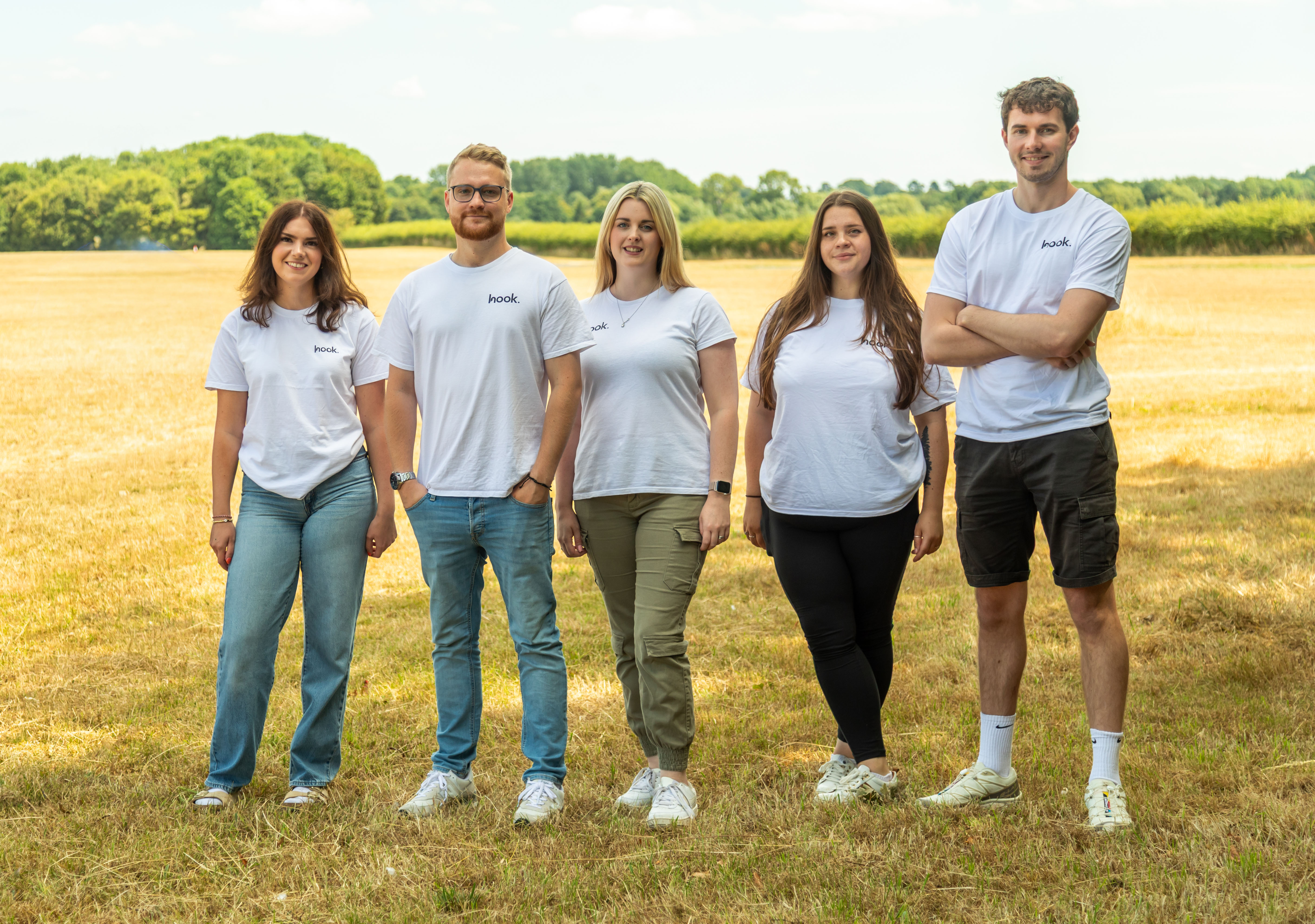
Hook-digital is a full-service marketing agency based in Oxford, covering everything from branding and design to social media, Google Ads, SEO, and website development. When your paid social creative, your brand identity, and your website all come from the same team, the consistency shows in your results. You only need to talk to one agency, and Hook-digital handles the rest. Get in touch to find out how we can support your paid social activity.
FAQ
What is paid social advertising?
Paid social advertising is the practice of paying social media platforms to display targeted adverts to defined audiences. It guarantees distribution and delivers measurable results from the day a campaign goes live.
What is the difference between organic and paid social ads?
Organic social relies on your content reaching followers naturally, which takes months or years to build meaningful reach. Paid social delivers guaranteed distribution to a defined audience immediately, at a cost set by your budget and the platform auction.
How much should I budget for paid social advertising?
Early-stage businesses should budget a minimum of £500–£2,000 per platform per month for initial testing. Growth-stage businesses typically allocate 10–30% of revenue to paid social spend, concentrating budget on one or two platforms before expanding.
Which platform is best for paid social advertising?
The best platform depends on your audience and objective. Meta suits most business types due to its scale and retargeting tools. LinkedIn is the strongest choice for B2B campaigns. TikTok outperforms Meta for top-of-funnel awareness in the majority of consumer brands.
How do I measure whether my paid social campaigns are working?
Track CPM and CTR at the awareness stage, CPC and cost per lead in the middle of the funnel, and CPA and ROAS at the conversion stage. Use Conversions API for accurate attribution, and run incrementality tests such as geo holdouts to verify your platform-reported results.
Recommended
- PPC advertising explained for small business owners | Hook Digital - Oxford’s Premier Full-Service Marketing Agency
- Types of social media advertising formats explained | Hook Digital - Oxford’s Premier Full-Service Marketing Agency
- How Can Businesses Use Social Media for Marketing | Hook Digital - Oxford’s Premier Full-Service Marketing Agency
- A Practical Guide for Businesses and Brands Considering Google Ads | Hook Digital - Oxford’s Premier Full-Service Marketing Agency
.png)


