

.webp)

.svg)
Role of agency account management: a clear guide

Agency account management is the process of overseeing client relationships and coordinating project delivery to align what clients expect with what agency teams actually produce. Without it, briefs get misinterpreted, timelines slip, and trust erodes quietly before anyone notices the damage. The role of agency account management sits at the centre of every successful client engagement, acting as the communication layer between the people paying for work and the people doing it. Get it right, and your agency retains clients for years. Get it wrong, and even brilliant creative work cannot save the relationship.
What does the role of agency account management involve?
Account managers serve as the primary relationship owners, keeping clients and internal teams aligned so projects move forward without friction. That definition sounds simple. The reality is considerably more demanding.
The account manager (AM) is the client’s main point of contact inside the agency. Every question, concern, and request flows through them first. They translate what the client wants into a clear, workable brief that creative and delivery teams can act on. Without that translation layer, you end up with designers guessing at objectives and strategists building campaigns around assumptions.

Day to day, the role covers a wide range of tasks. Account managers typically manage portfolios of 2–5 client accounts, balancing strategic communication with project oversight across each one. That portfolio model keeps the work focused and the relationships personal.
Core responsibilities include:
- Client communication: Acting as the single point of contact for all client queries, updates, and approvals
- Brief writing: Translating client requests into clear, detailed briefs for creative, digital, and production teams
- Timeline and budget management: Tracking project milestones and flagging risks before they become problems
- Scope management: Identifying scope creep early and managing change orders before they eat into margins
- Internal advocacy: Representing the client’s priorities to internal teams while protecting the agency’s capacity and quality standards
Pro Tip: Keep a running log of every scope change conversation, even informal ones. A short email summary after a call protects both the client relationship and the agency’s margins when billing disputes arise.
The AM also plays a quieter but equally important role: keeping internal teams motivated and informed. When a client changes direction mid-project, the AM absorbs that pressure and reframes it constructively for the team. That buffer function is undervalued but critical to agency culture.
How does effective account management improve client retention?
A high-performing account manager helps clients feel informed, protected, and prioritised, which drives long-term retention more than any individual campaign result. That emotional dimension is often overlooked in job descriptions but shows up clearly in renewal rates.
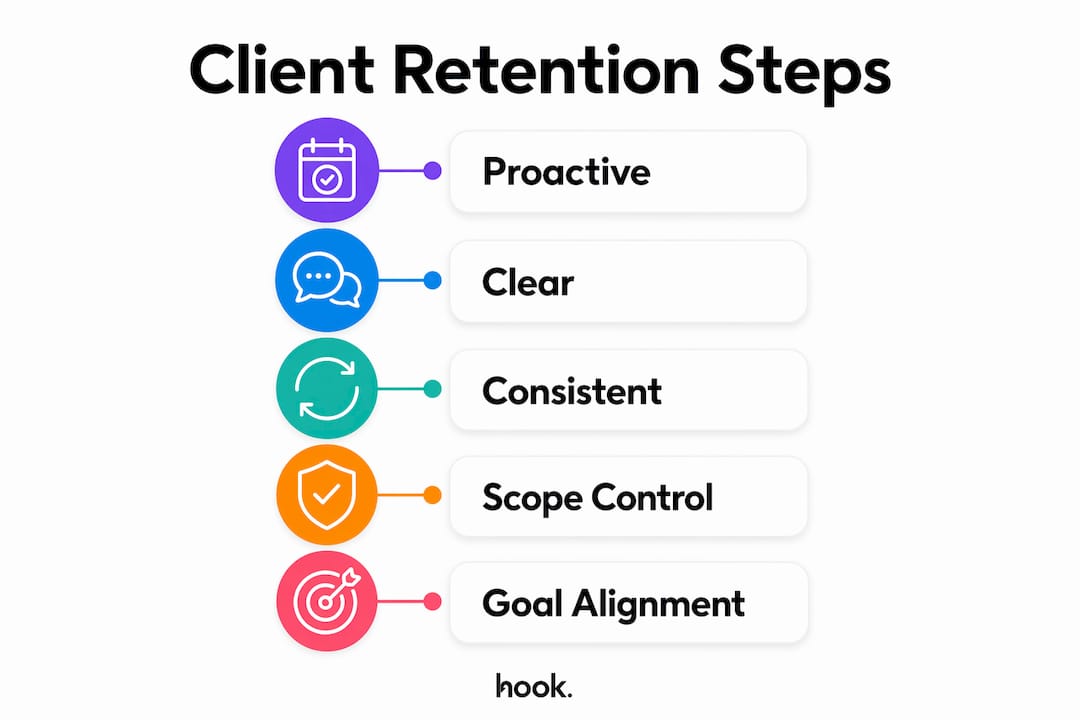
Proactive communication is the single biggest driver of client satisfaction. Clients do not leave agencies because results were imperfect. They leave because they felt ignored, surprised by problems, or unsure whether the agency understood their business. Regular check-ins, milestone confirmations, and honest progress updates prevent all three.
Structured operating models like Practiq’s “first 30 days” strategy demonstrate exactly how this works in practice. The model uses near-daily updates in the first month of a client relationship, then moves into validation phases and strategic conversations as trust builds. The result is a client who feels genuinely supported rather than handed off after signing.
Scope management connects directly to profitability. Effective scope management by account managers reduces unexpected budget overruns and protects agency margins. Every unmanaged scope change is a hidden cost that the agency absorbs silently.
| Account management practice | Impact on agency |
|---|---|
| Proactive communication cadence | Reduces client-initiated escalations and builds trust |
| Early issue detection | Prevents project delays and protects the agency’s reputation |
| Scope change documentation | Protects margins and creates a clear billing record |
| Performance reporting tied to client goals | Moves the relationship from vendor to trusted adviser |
| Regular strategic conversations | Increases upsell and cross-sell opportunities naturally |
Clients who perceive their agency as an adviser rather than a vendor show significantly higher loyalty and are far less likely to switch agencies for a cheaper alternative. That shift in perception is built entirely through consistent, thoughtful account management.
Pro Tip: Tie your reporting directly to the client’s business goals, not just campaign metrics. When a client sees how your work connects to their revenue or growth targets, the conversation shifts from “what did we spend?” to “what did we gain?”
How do agencies scale account management as they grow?
As agencies grow, clearly defining the account management role and separating it from delivery execution improves client satisfaction and reduces internal stress. This is one of the most common structural challenges growing agencies face.
In small agencies, the founder often handles client relationships personally alongside every other function. That works at low volume. As the client base grows, founder-led account management becomes a bottleneck. Clients get slower responses, briefs become less thorough, and the founder burns out trying to do everything at once.
The solution is not always hiring a full-time AM immediately. Many agencies introduce a shared or part-time account management function first, assigning one person to own client communication across several accounts while delivery specialists focus on execution. This separation alone reduces friction significantly.
| Agency size | Typical account management structure |
|---|---|
| 1–5 people | Founder or senior team member handles all client contact |
| 6–15 people | Dedicated AM role introduced, often shared across accounts |
| 16+ people | Multiple AMs with defined portfolios, supported by AM lead |
Scaling account management also requires systems. Without clear processes, adding more AMs just multiplies the chaos. Agencies that grow well invest in role clarity first: who owns the client relationship, who owns delivery, and how do those two functions communicate internally.
Key structural decisions when scaling include:
- Defining the boundary between account management and project management
- Setting maximum portfolio sizes per AM to protect relationship quality
- Creating standard onboarding processes so every new client gets the same structured start
- Building internal escalation paths so AMs know when to involve senior leadership
Using project management tools with client-facing dashboards improves transparency and reduces unnecessary back-and-forth communication. Tools like ticketing systems and shared file platforms create a single source of truth for both the agency and the client. That clarity prevents the “I thought you said…” conversations that damage trust.
What best practices and tools support excellent account management?
Account management is communication-heavy work. Success depends on reducing friction by translating requests clearly and preventing trust erosion before it starts. The best AMs build systems around this rather than relying on memory and goodwill.
A structured communication cadence is the foundation of good practice. After onboarding, the Practiq model suggests near-daily updates in the first 30 days, followed by milestone confirmations, and then regular strategic conversations as the relationship matures. That progression mirrors how trust actually develops between people.
Practical steps for excellent account management:
- Establish a communication protocol at the start of every engagement. Agree on preferred channels, response times, and meeting frequency before the first project begins.
- Write a clear brief for every piece of work. Even small requests deserve a written brief. It protects the client, the team, and the AM when expectations diverge.
- Review scope formally at each project milestone. Do not wait for a client to notice that the work has grown beyond the original agreement.
- Own the account P&L. Account managers who own account P&L understand their portfolio economics and can identify profitability and growth opportunities proactively. They run accounts like small business units, tracking margins and hours without relying solely on finance teams.
- Use project management software consistently. Tools like co.agency, Asana, or Monday.com give clients visibility into progress and reduce the volume of status-update emails.
Pro Tip: Automate the routine and personalise the important. Use software to send project status updates automatically, then spend that saved time on genuine strategic conversations with your clients.
Training matters too. Account management skills are learnable, but agencies rarely invest in formal AM development. Regular role-plays of difficult client conversations, structured feedback after project reviews, and access to resources like the Agency Growth Masterclass all build AM capability over time. The agencies that treat AM as a profession rather than a support function consistently outperform those that treat it as an admin role.
Key takeaways
Effective agency account management is the single most reliable driver of client retention, margin protection, and long-term agency growth.
| Point | Details |
|---|---|
| Core role definition | Account managers own client relationships and translate briefs to keep projects on track. |
| Retention driver | Proactive communication and structured onboarding build trust that outlasts any single campaign. |
| Margin protection | Documenting scope changes and managing change orders prevents silent profit erosion. |
| Scaling structure | Separating account management from delivery execution reduces friction as agencies grow. |
| Tools and systems | Client-facing dashboards and project management software reduce unnecessary communication. |
Why account management is the most underrated agency role
Having worked closely with agencies across Oxfordshire and beyond, I have seen the same pattern repeat itself. The agencies that struggle with retention are rarely the ones producing bad work. They are the ones where account management is treated as an afterthought, handled by whoever has a spare moment rather than someone who owns it properly.
The shift from vendor to trusted adviser does not happen because of a brilliant campaign. It happens because a client feels genuinely understood over months of consistent, honest communication. That is an account management outcome, not a creative one. I have watched clients stay with agencies through genuinely difficult periods, including missed deadlines and budget overruns, simply because the AM had built enough trust to have an honest conversation about what went wrong and how it would be fixed.
The future of agency account management is not about adding more tools or frameworks. It is about investing in the people who hold client relationships together. Agencies that treat their AMs as senior professionals, give them real ownership of account economics, and support their development will retain clients and grow revenue far more reliably than those chasing the next new service offering.
If you are building or refining your agency’s account management function, start with role clarity and communication protocols. Everything else follows from those two foundations.
— Hook
Hook-digital can help you get this right
Strong account management sits at the heart of everything Hook-digital does for clients in Oxford and across the UK. Every project we take on has a clear point of contact, a structured communication process, and a team that understands your business goals, not just your brief.

Whether you need branding and design support or a full marketing function you can rely on, Hook-digital brings every discipline under one roof. You speak to one team, and that team coordinates everything. No briefing multiple agencies, no chasing updates from three different suppliers, no wondering who owns the relationship. If you want to see how that works in practice, book a free consultation and we will talk through exactly what your business needs.
FAQ
What is the role of an account manager in a marketing agency?
An account manager owns the client relationship, translates briefs for internal teams, and manages timelines, budgets, and approvals. Their primary function is keeping the client informed and the project on track.
How many clients does an agency account manager typically handle?
Account managers typically manage portfolios of 2–5 client accounts, balancing strategic communication and project oversight across each one to maintain quality.
Why does account management affect agency profitability?
Account managers who manage scope carefully and document change orders prevent budget overruns that erode margins. Those who own their account P&L can also identify growth opportunities within existing client relationships.
What is the difference between account management and project management in an agency?
Account management owns the client relationship and strategic communication. Project management owns the internal delivery process. Separating these two functions reduces confusion and improves both client satisfaction and team efficiency.
How does account management support client retention?
Clients who feel informed, protected, and prioritised are far less likely to switch agencies. Structured communication cadences, early issue resolution, and reporting tied to business goals all build the trust that keeps clients long term.
Recommended
- Marketing agency evaluation checklist: 2026 guide | Hook Digital - Oxford’s Premier Full-Service Marketing Agency
- What is a creative agency model? A clear guide | Hook Digital - Oxford’s Premier Full-Service Marketing Agency
- What is a full service agency? a clear guide | Hook Digital - Oxford’s Premier Full-Service Marketing Agency
- How to brief a video production agency effectively | Hook Digital - Oxford’s Premier Full-Service Marketing Agency
.png)


