

.webp)

.svg)
Role of SEO in demand generation: a guide for marketing leaders

SEO is the demand-capture engine that converts active search intent into qualified leads and builds long-term pipeline. Unlike paid channels that stop the moment your budget runs out, organic search consistently captures buyers who are already looking for a solution. If you want one action to take this week: run an intent audit across your top 20 ranking pages and ask your sales team which questions they hear most often. That gap is your content roadmap.
The importance of SEO in marketing has shifted considerably. AI-generated answers are changing how buyers discover brands, which means success is no longer measured purely in clicks. Brand presence, lead quality, and organic pipeline are now the metrics that matter. The global SEO services market has grown significantly, reflecting how seriously businesses invest in this channel, and has continued to grow, which tells you something about how seriously businesses are investing in this channel. The question is whether your investment is structured to capture demand or simply generate traffic.
Table of Contents
- How does SEO map to the demand generation funnel?
- Your SEO playbook for driving demand: a 30/60/90-day plan
- How SEO supports your other demand-generation channels
- How do you measure SEO’s impact on demand generation?
- Common mistakes that undermine SEO-led demand generation
- How AI is changing the role of SEO in demand generation
- Key takeaways
- Why most SEO strategies miss the demand opportunity
- How Hook-digital can help you build an SEO-led demand engine
- Useful sources
- FAQ
How does SEO map to the demand generation funnel?
Understanding the role of SEO in demand generation starts with mapping it to buyer intent at each stage of the funnel. A buyer researching a problem has very different needs from one comparing vendors, and your SEO strategy should reflect that.
Awareness: capturing early-stage curiosity
At the top of the funnel, buyers are problem-aware but not yet solution-aware. They search for symptoms, questions, and broad topics. Blog posts, thought-leadership guides, and educational pillar pages perform best here. Your goal is visibility and trust, not conversion. A well-placed content upgrade or newsletter sign-up is the appropriate call to action, not a demo request.

Consideration: guiding buyers toward your solution
Mid-funnel buyers are evaluating options. They search for comparisons, use cases, and “how to” queries tied to specific outcomes. Solution pages, case studies, and detailed how-to guides map to this stage. This is where content pillars and internal linking do their best work, passing authority from educational content to your commercial pages and guiding readers toward a decision.

Decision: converting intent into leads
Bottom-of-funnel buyers are ready to act. They search for brand names, product comparisons, pricing, and reviews. Product pages, landing pages, and comparison content belong here. A direct CTA, a demo request form, or a free audit offer converts well when the page matches the query precisely.
| Funnel stage | Buyer intent | Page types | Most valuable CTAs |
|---|---|---|---|
| Awareness | Problem research, broad questions | Blog posts, pillar guides, glossaries | Newsletter sign-up, content download |
| Consideration | Solution evaluation, comparisons | Case studies, solution pages, how-to guides | Gated asset, webinar registration |
| Decision | Vendor selection, pricing | Landing pages, product pages, comparison pages | Demo request, free audit, contact form |
Key principle: place lead capture where it matches intent. A pop-up asking for a demo on a top-of-funnel blog post will hurt conversion. A well-timed checklist download on the same page can lift it considerably.
Your SEO playbook for driving demand: a 30/60/90-day plan
Knowing how SEO drives demand is one thing. Having a plan your team can actually execute is another. Here is a practical playbook structured around the first 90 days.
Days 1–30: audit and prioritise
- Run an intent audit. Map your existing pages to funnel stages. Identify which pages rank for high-intent queries but have no lead-capture mechanism.
- Interview sales. Collect the top 10 questions buyers ask before signing. These become your priority content briefs.
- Fix technical foundations. Check indexability, crawl errors, and site speed. Poor performance reduces conversions before a visitor even reads your content. Your website needs to load fast and be technically sound before content investment pays off.
- Identify quick wins. Find pages ranking in positions 5–15 for high-intent queries. These are candidates for on-page optimisation that can move the needle within weeks.
Days 31–60: build content architecture
- Create or consolidate content pillars. Group related content around a central pillar page and link supporting posts back to it. This structure helps search engines understand your authority and guides readers toward conversion pages.
- Add micro-yes flows. Rather than asking for contact details immediately, offer a small, low-friction commitment first. A micro-yes approach might be a quiz, a checklist download, or a short assessment before the full demo request. It raises opt-in rates and captures more qualified leads.
- Optimise for structured data. Add schema markup to key pages so search engines and AI systems can extract and cite your content reliably.
Days 61–90: authority and measurement
- Launch a link-building outreach. Create one genuinely shareable asset, whether that is original research, a data visualisation, or a practical template, and pitch it to relevant publications. Quality backlinks remain one of the strongest trust signals for both traditional search and AI citation.
- Set up your demand dashboard. Track branded search growth, organic-sourced marketing-qualified leads (MQLs), and assisted conversions alongside rankings and traffic.
- Align reporting with revenue. Share organic pipeline data with your leadership team monthly, not just traffic reports.
Pro Tip: Gated content works best at the consideration stage, not the awareness stage. Ungated educational content builds trust and organic authority. Gate your highest-value assets, such as ROI calculators, detailed templates, and buyer guides, where the visitor has already demonstrated intent.
How SEO supports your other demand-generation channels
SEO does not work in isolation. When it is connected to your paid, email, and account-based marketing (ABM) efforts, it amplifies the whole system.
- SEO and PPC: Use organic ranking data to identify which keywords convert before committing paid budget to them. Pages that rank organically for a term and also carry a paid ad reinforce brand presence at the top of the SERP. Better landing page relevance, driven by good on-page SEO, also lowers your cost per click. For a deeper look at how paid search complements organic, the benefits of PPC are worth understanding alongside your SEO strategy.
- SEO and email nurture: Your highest-performing organic content tells you exactly what your audience cares about. Use that data to build email sequences that mirror the same topics, moving subscribers from awareness to consideration with content they have already shown interest in.
- SEO and ABM: Create intent-driven landing pages for specific industries or job titles that your target accounts hold. Organic traffic to these pages signals which accounts are actively researching, giving your sales team a warm list to work from.
- SEO and sales alignment: Feed buyer questions from your CRM directly into your content calendar. When sales records the objections and questions that come up most often, those become the briefs for your highest-converting content. This closes the loop between search intent and sales conversations.
The practical payoff is a shorter sales cycle. Buyers who have already consumed your content arrive at a sales conversation better informed, with fewer objections and a clearer sense of fit.

How do you measure SEO’s impact on demand generation?
Rankings and pageviews are early signals, not success metrics. True measurement of SEO as a demand channel requires tracking what happens downstream.
The metrics that actually matter
- Branded search growth: an increase in searches for your brand name shows that organic visibility is building mental availability, even when buyers do not click immediately.
- Organic-sourced MQLs: track how many marketing-qualified leads entered the pipeline through an organic touchpoint, whether as first touch or assisted.
- Assisted conversions: most buyers touch multiple channels before converting. A multi-touch attribution model credits organic for its role in the journey, not just the last click.
- Lead quality from organic: compare the close rate and average deal value of organic-sourced leads against other channels. Organic visitors self-qualify by typing specific queries, which often means higher intent and better fit.
- Time-to-deal impact: measure how organic content consumption correlates with shorter sales cycles.
| Metric | What it shows | How to act on it |
|---|---|---|
| Branded search volume | Brand awareness and mental availability | Increase if content and PR are working; investigate if flat |
| Organic-sourced MQLs | Pipeline contribution from SEO | Compare against paid MQL cost to justify investment |
| Assisted conversions | SEO’s influence across the buyer journey | Use multi-touch attribution; do not rely on last-click only |
| Organic conversion rate | Quality of traffic and landing page relevance | Optimise pages where traffic is high but conversion is low |
| Lead quality score | Fit and intent of organic leads | Align with sales to score and compare against other sources |
Realistic timelines
SEO is not a quick-win channel, and setting honest expectations matters. In the first three months, you will typically see technical improvements, early ranking movements, and baseline data. By month six, well-optimised content pillars start generating consistent organic traffic and early MQLs. By month twelve, a structured SEO programme should be contributing meaningfully to pipeline, with compounding returns as domain authority grows. The importance of SEO in marketing lies precisely in this compounding nature: a well-optimised page can generate qualified pipeline for years after publication.
Common mistakes that undermine SEO-led demand generation
Most SEO programmes fail to drive demand not because SEO does not work, but because of avoidable strategic errors.
- Targeting low-intent keywords. Ranking for broad, informational terms that attract researchers rather than buyers fills your traffic reports but not your pipeline. Prioritise queries that signal a problem your product solves.
- Treating SEO as direct response. Expecting immediate leads from a new blog post is the wrong frame. SEO builds visibility and captures demand over time. Measuring it against a paid campaign’s week-one results will always disappoint.
- Poor handoff to sales. When organic leads arrive, sales teams often do not know which content the lead consumed or what problem they were researching. Connecting your CRM to your analytics platform closes this gap.
- Ignoring conversion architecture. A page can rank well and still convert poorly if there is no clear next step. Every high-traffic page needs a relevant, low-friction CTA matched to the visitor’s intent stage.
- Neglecting brand entity signals. Inconsistent brand names, descriptions, and contact details across the web confuse search engines and AI systems alike.
Mini case example: A B2B software company was generating significant organic traffic to a “what is X” blog post but seeing almost no leads from it. After an intent audit, the team discovered the post ranked for awareness-stage queries but had no internal links to the solution page and no mid-funnel CTA. Adding a relevant content download and two internal links to the product page increased organic-sourced demo requests from that post within 60 days, without changing the ranking.
Pro Tip: Structured content for AI citation is where most teams underinvest. Clear headings, concise answers, and consistent brand entity signals across your website, Google Business Profile, and third-party directories all help AI systems reference your brand reliably in generated answers.
How AI is changing the role of SEO in demand generation
The shift from click-focused SEO to brand-presence SEO is the most significant change in how organic search drives demand. Brands that appear in AI-generated answers are placed into buyers’ mental shortlists even when no click occurs. That changes what you should be optimising for.
Forrester research cited by Salesforce notes that 94% of B2B buyers now use AI during their purchasing journey. That figure alone should shift how you think about visibility. A buyer who asks an AI assistant about solutions in your category and sees your brand named as an authority has already begun forming a preference, before they ever visit your website.
What this means for your strategy: appearing in AI answers requires the same signals that earn traditional search rankings, but with greater emphasis on entity clarity, structured content, and citation-worthiness.
- Entity clarity: use consistent brand names, descriptions, and structured data across every owned and earned channel. AI systems reference brands they can identify reliably.
- Structured content formats: FAQ sections, numbered lists, and concise definitions are more likely to be extracted and cited by AI overviews. Format your most authoritative content with this in mind.
- Generative Engine Optimisation (GEO): running GEO in parallel with traditional SEO protects your inbound volume from both search engines and AI-driven discovery. This is not a replacement strategy; it is a dual approach.
- Measurement without clicks: track branded search growth and direct traffic uplift as proxies for AI-driven awareness. If branded searches increase while overall click volume stays flat, AI is doing its job.
- Content formats that feed both channels: original research, expert commentary, and well-structured how-to guides perform in traditional SERPs and are more likely to be cited in AI overviews. Video content and AI-influenced marketing are also growing signals worth investing in.
The move from keyword-first to entity-first optimisation is not optional for brands that want to remain visible as AI reshapes discovery. It is the next evolution of how SEO drives demand.
Key takeaways
SEO drives demand generation by capturing active search intent and converting it into qualified pipeline, with the greatest returns coming from aligning content, technical performance, and measurement with buyer intent at every funnel stage.
| Point | Details |
|---|---|
| Reframe SEO as demand capture | Measure organic contribution to pipeline and lead quality, not just traffic and rankings. |
| Map content to funnel stages | Match page types and CTAs to buyer intent: educational content at awareness, gated assets at consideration, direct CTAs at decision. |
| Run a 30/60/90-day intent audit | Start with an intent audit, fix technical foundations, then build content pillars and micro-yes flows. |
| Track downstream metrics | Prioritise branded search growth, organic-sourced MQLs, and assisted conversions over impressions alone. |
| Hook-digital as your SEO partner | Hook-digital offers intent audits, content programmes, and technical SEO as part of a full-service approach from Oxford. |
Why most SEO strategies miss the demand opportunity
Here is an opinion that might be uncomfortable: most businesses are not doing SEO wrong technically. They are doing it wrong strategically. They are optimising for rankings when they should be optimising for revenue. They are celebrating traffic growth when organic leads are flat. They are treating SEO as a content production exercise rather than a demand-capture system.
The shift that actually moves the needle is treating every SEO decision through the lens of buyer intent. Which queries signal that someone is ready to buy, or nearly ready? Which pages are ranking for those queries but failing to convert? Where is the handoff between marketing and sales breaking down? Those are the questions that unlock the real impact of SEO on sales.
There is also a tendency to underestimate the compounding nature of organic search. A paid campaign delivers results while it runs and stops when the budget stops. A well-built content pillar, properly linked and technically sound, can generate qualified leads for years. That asymmetry is the strongest argument for treating SEO as a long-term revenue channel rather than a quarterly tactic.
The brands winning at SEO-led demand generation right now are not necessarily the ones with the biggest budgets. They are the ones with the clearest understanding of their buyer’s journey, the most consistent brand signals across the web, and the discipline to measure what actually matters.
How Hook-digital can help you build an SEO-led demand engine
If you have read this far, you already understand that SEO-led demand generation is not a set-and-forget tactic. It requires a clear strategy, consistent execution, and measurement that connects organic activity to revenue.
Hook-digital is a full-service marketing agency based in Oxford, and SEO-led demand generation is exactly the kind of challenge we are built for. Rather than coordinating separate agencies for strategy, content, design, and technical work, you get one team that handles all of it.
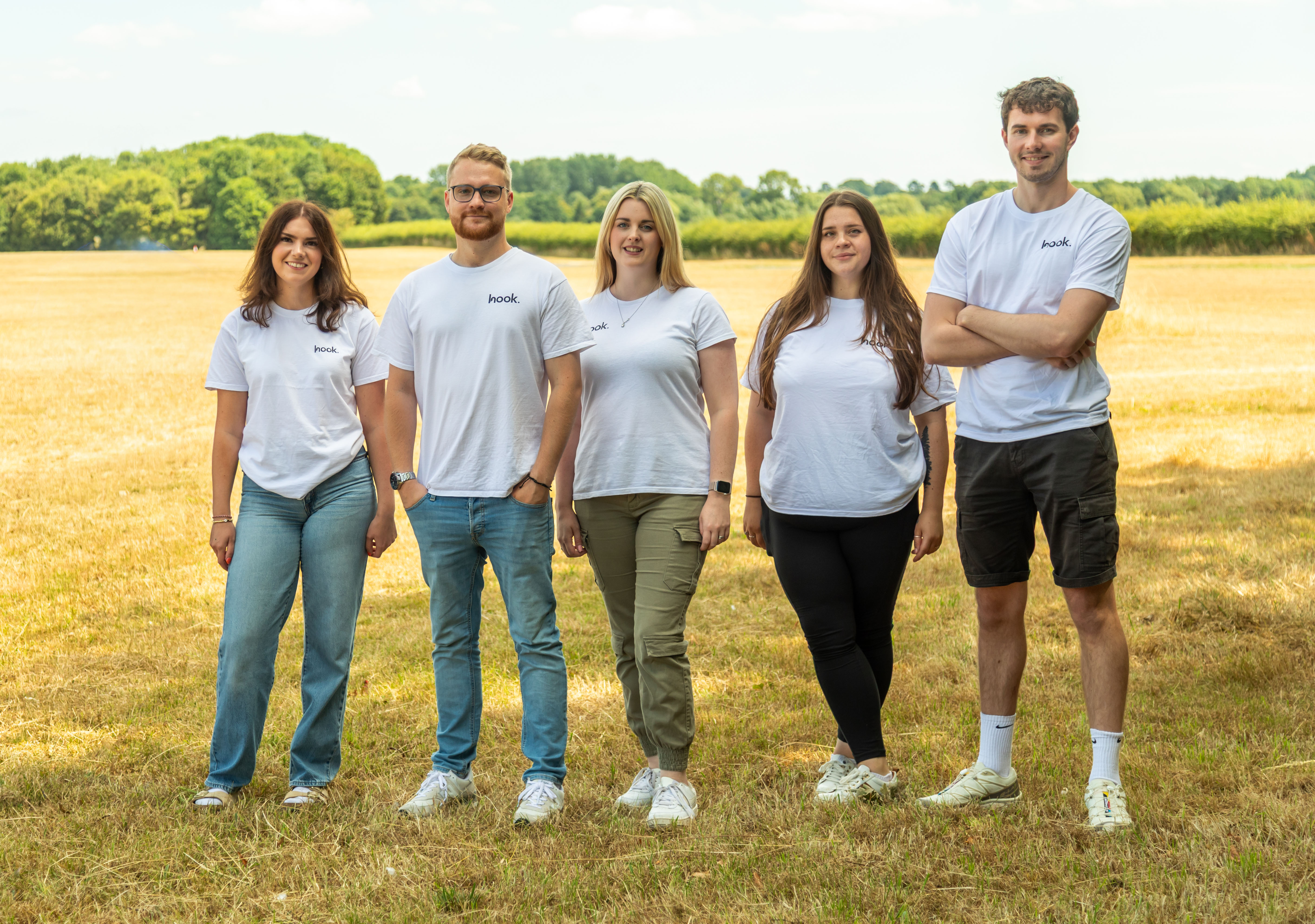
Our typical first step with new clients is a discovery session and site intent audit: we map your existing content to buyer intent, identify the gaps between your rankings and your pipeline, and build a prioritised plan for the next 90 days. From there, we can support conversion-led website builds, content pillar development, video and creative assets for authority building, and measurement dashboards that report on organic pipeline, not just traffic.
If you want to understand what an SEO programme built around demand generation could look like for your business, get in touch with Hook-digital to arrange a 60-minute discovery call.
Useful sources
- Truststratus: SEO is demand capture — the clearest articulation of SEO as a revenue channel rather than a performance channel; used throughout the measurement and framing sections.
- Search Engine Journal: from performance SEO to demand SEO — covers the shift to entity-first optimisation and AI-driven brand presence; primary source for the AI and measurement sections.
- Salesforce: SEO lead generation and GEO — practical guidance on hybrid traditional and AI search strategies, including the Forrester B2B buyer data.
- Shopify: SEO lead generation strategies — micro-yes flows, content pillar architecture, and site speed guidance; cited in the playbook and best practices sections.
- Semrush: why SEO matters — supporting evidence for compounding organic returns and brand awareness through search visibility.
- Rankability: SEO market scale — source for the $46.7 billion global SEO services market figure cited in the introduction.
- Hook-digital — for marketing leaders who want to discuss an SEO-led demand programme with a full-service agency.
FAQ
What is the main role of SEO in demand generation?
SEO captures active search intent and converts it into qualified leads by ensuring your brand appears when buyers are actively researching problems you solve. Treated as a demand-capture channel rather than a traffic tool, it builds long-term pipeline that compounds over time.
Is SEO still relevant with AI changing search behaviour?
SEO is evolving rather than declining. Brands appearing in AI-generated answers are placed into buyers’ mental shortlists even without a click, so the channel’s influence on demand is growing, not shrinking. The measurement approach needs to shift toward branded search growth and lead quality rather than raw click volume.
What are the 3 Cs of SEO?
Definitions vary across practitioners, but a widely used version covers content (creating pages that match buyer intent), crawlability (ensuring search engines can index your site), and credibility (building authority through backlinks and consistent brand signals). All three are necessary for SEO to drive demand effectively.
How long does SEO take to generate demand?
Expect early ranking movements and technical improvements within the first three months, meaningful organic traffic and initial MQLs by month six, and a measurable contribution to pipeline by month twelve. The compounding nature of organic search means returns continue to grow well beyond that initial period.
How does Hook-digital approach SEO for demand generation?
Hook-digital starts with a site intent audit that maps existing content to buyer intent, identifies pipeline gaps, and prioritises a 90-day plan. From there, the team supports content architecture, technical SEO, and measurement dashboards that report on organic-sourced leads rather than traffic alone.
Recommended
- Types of lead generation tactics: your 2026 guide | Hook Digital - Oxford’s Premier Full-Service Marketing Agency
- Why social media builds customers: a practical guide | Hook Digital - Oxford’s Premier Full-Service Marketing Agency
- Why Blogging is Key to Generating Leads | Hook Digital - Oxford’s Premier Full-Service Marketing Agency
- Unlocking Success: The Benefits of PPC/Google Ads for Marketing Your Business | Hook Digital - Oxford’s Premier Full-Service Marketing Agency
.png)


