
.webp)

.svg)
The role of design in marketing: a 2026 guide
Design is the first language your brand speaks, and consumers form a judgement about it in just 0.05 seconds. That split-second reaction shapes whether someone stays, clicks, or leaves. The role of design in marketing goes far beyond aesthetics. It is a system for building trust, reducing confusion, and guiding people towards a decision. This guide explains how visual communication works at a subconscious level, which design strategies deliver measurable results, and what marketing professionals and business leaders need to prioritise in 2026.
How does design influence consumer perception and trust?
Design shapes perception before a single word is read. The industry term for this is visceral design, which describes the immediate emotional and sensory response a person has to a visual before any rational thought kicks in. Visceral design creates instant trust and a sense of product value, anchoring long-term loyalty from the very first impression. That means your colour palette, typeface, and layout are doing persuasive work the moment someone lands on your page.
The numbers behind this are striking. 92.3% of urban consumers believe design directly affects perceived product quality, and 90.7% report feeling a sense of brand credibility from specific colour, font, and shape combinations. That is not a marginal effect. It means the majority of your audience is making quality judgements based on visual cues alone, often without realising it.
“Consumers struggle to consciously identify the design cues influencing their trust. Design functions as a subconscious trust-building system, not a decorative layer.”
This has a direct implication for how you think about brand visual elements. If your typography is inconsistent, your colour scheme feels cheap, or your layout is cluttered, you are signalling low quality before your product has had a chance to speak. The reverse is equally true. A clean, considered design tells the viewer you are credible, professional, and worth their attention.
What is the impact of design on engagement and conversion?

Design is not just about looking good. It is about reducing the mental effort required to take action. The core aim of good marketing design is to lower cognitive load, which means making it easier for someone to understand what you offer and what to do next.
Strategic design and clear visual hierarchy increase engagement and conversion rates by 25–40% on high-performing websites. That is a significant commercial return from decisions about spacing, contrast, and layout. The mechanism is straightforward: when a page is easy to scan, people stay longer and act more readily.
Three design principles drive this outcome most reliably:
- Visual hierarchy. Size, weight, and contrast tell the eye where to look first. A headline should dominate, a subheading should support it, and a call to action should stand out clearly from the surrounding content.
- The one-click rule. Every page should have one primary action you want the visitor to take. Multiple competing calls to action split attention and reduce conversions. Decide on the goal, then design everything else to support it.
- Layered content. Lead with the most important information, then allow interested readers to go deeper. This mirrors how people actually read online, scanning first and reading second.
| Design element | Effect on conversion |
|---|---|
| Clear visual hierarchy | Reduces decision fatigue and guides action |
| Consistent CTA placement | Increases click-through rates |
| Adequate white space | Improves readability and time on page |
| Mobile-optimised layout | Reduces bounce rate significantly |
Pro Tip: Test your page by squinting at it. If the primary call to action does not stand out immediately, your visual hierarchy needs work. Contrast and size are your two most powerful tools.
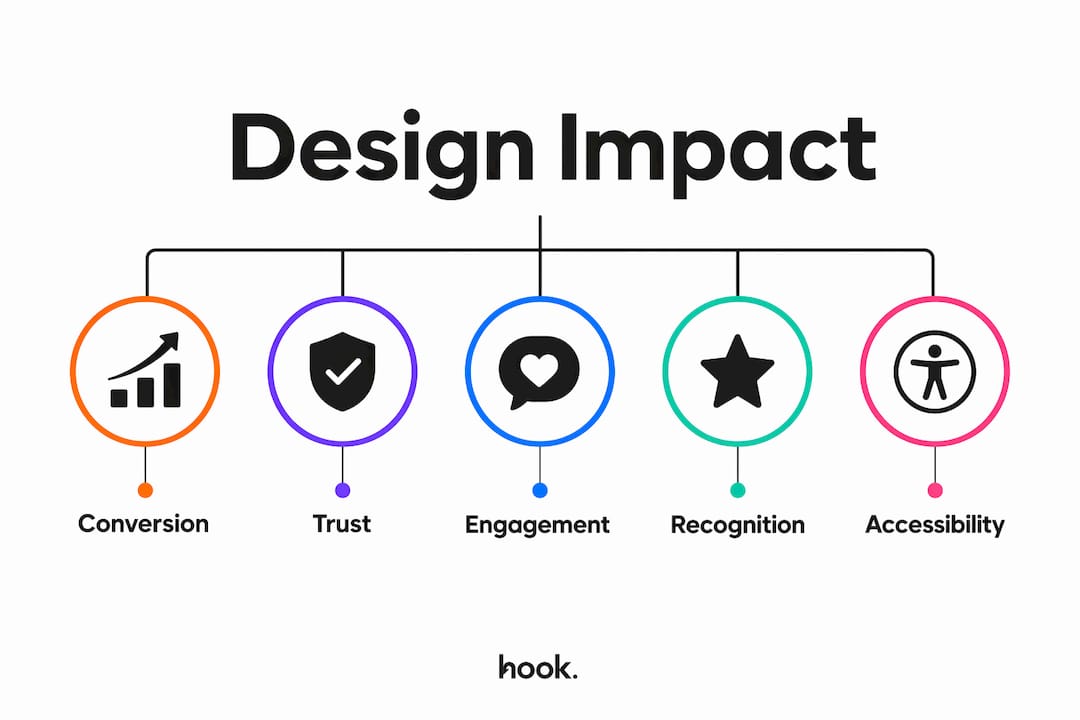
Understanding how effective CTAs are designed is one of the fastest ways to lift conversion rates without changing your offer or your traffic source.
What design strategies drive marketing success?
Consistent visual branding is the single most reliable design strategy for building recognition and loyalty. Consistent use of colour, font, and imagery builds brand recognition over time, while inconsistency actively damages trust. This is not about being rigid. It is about giving your audience a coherent visual language they can recognise across every touchpoint.
Beyond consistency, several specific strategies separate effective marketing design from average work:
- Colour psychology. Colour carries meaning that varies by culture and context. Blues signal trust and reliability. Reds create urgency. Greens suggest health or sustainability. Choosing colours intentionally, rather than by preference, is a core part of colour’s role in brand perception.
- Microcopy. The small words around buttons, form fields, and error messages carry significant persuasive weight. “Get your free report” outperforms “Submit” because it tells the reader what they gain. Microcopy is design thinking applied to language.
- Accessibility standards. Accessibility improvements such as sufficient colour contrast, alt text, and semantic HTML reduce bounce rates and strengthen trust signals. WCAG 2.2 compliance is not just an ethical requirement. It is a performance lever. Dark mode compatibility falls into the same category: it signals care for the user experience.
- AI-assisted design with human refinement. AI tools accelerate iteration and help teams produce more variations faster. The risk is that AI without human oversight produces generic, homogenised results that look like every other brand in your category. The best outcomes come from using AI to generate options and human judgement to select and refine them.
- Outcome-focused testimonials with visual support. A testimonial presented alongside a recognisable face, a logo, or a before-and-after visual carries more weight than plain text. The design context amplifies the social proof.
Pro Tip: Build a simple brand style guide covering your primary colours, typefaces, and logo usage rules. Share it with every person who creates content for your business. Consistency at this level costs nothing and pays back consistently.
What are the challenges and future trends in marketing design?
The biggest design risk in 2026 is sameness. As AI tools become standard in design workflows, brands that rely on them without editorial oversight will start to look identical. Differentiation requires deliberate creative choices, not just faster production.
Several challenges and trends are shaping how marketing professionals approach design right now:
- Design homogenisation. When every brand uses the same AI-generated stock aesthetic, visual identity loses its power to differentiate. The solution is to ground design decisions in your specific brand values and audience, not in what the tool produces by default.
- Mobile-first imperatives. Mobile layouts with large tap targets and clear content separation reduce bounce rates by up to 73%. If your design process starts on desktop and adapts down to mobile, you are working backwards. Start with the smallest screen and scale up.
- Balancing trend with timelessness. Chasing every visual trend produces a brand that looks dated within 18 months. The most durable brands use contemporary touches within a stable visual framework. Think of it as updating the furniture without rebuilding the house.
- Iterative testing. Design decisions should be tested, not assumed. A/B testing headlines, CTA colours, and image choices gives you real data on what your specific audience responds to. Gut instinct is a starting point, not a conclusion.
- Measuring design impact. Conversion rate, time on page, and bounce rate are the clearest indicators of whether your design is working. Tracking these metrics before and after design changes tells you what is actually driving results.
A well-designed website sits at the centre of all of this. It is where most of these design decisions live and where their commercial impact is most directly measurable.
Key takeaways
Design is a trust-building system that shapes consumer behaviour from the first 0.05 seconds of contact, and consistent, accessible, user-focused design directly increases conversion rates and brand loyalty.
| Point | Details |
|---|---|
| First impressions are instant | Users judge your brand in 0.05 seconds, making visual quality a commercial priority. |
| Design drives conversion | Clear visual hierarchy and reduced cognitive load increase conversions by 25–40%. |
| Consistency builds trust | Uniform colour, font, and imagery across touchpoints strengthens brand recognition. |
| Accessibility is performance | WCAG 2.2 compliance reduces bounce rates and signals credibility to users. |
| AI needs human oversight | AI tools accelerate design but require human refinement to avoid generic, undifferentiated results. |
Design is strategy, not decoration
Working with marketing teams and business leaders over the years, I have noticed one pattern more than any other: design gets treated as the last step. The strategy is set, the copy is written, and then someone is asked to “make it look nice.” That approach consistently underperforms.
The businesses that grow fastest treat design as part of the thinking process, not the finishing process. When you involve design decisions at the point where you are deciding what to say and how to say it, the result is more coherent and more persuasive. The visual and the verbal reinforce each other rather than sitting alongside each other awkwardly.
I have also seen the AI trap up close. Teams produce more assets faster, but the work starts to feel generic. The brands that stand out are the ones where a human has made a deliberate, sometimes counterintuitive choice. That might be an unusual typeface, an unexpected colour combination, or a layout that breaks the grid in a purposeful way. Those choices require taste and judgement, not just speed.
The other thing I would push back on is the idea that good design is expensive. Inconsistent design is expensive. Rebuilding trust after a poor first impression is expensive. Getting it right from the start, with a clear visual identity and a coherent system, is one of the highest-return investments a marketing team can make.
— Hook
How Hook-digital can help with your brand design
If you are ready to treat design as the strategic asset it is, Hook-digital works with businesses across Oxfordshire and beyond to build visual identities that perform.
Hook-digital’s branding and design services cover everything from initial brand identity through to campaign materials, web design, and ongoing creative support. The work is grounded in the same principles covered in this guide: clarity, consistency, and a clear understanding of how your audience thinks. Because Hook-digital is a full-service agency, your design, copy, and marketing strategy are developed together rather than in separate silos. If you want to see the kind of work that comes from that approach, the design portfolio is a good place to start.
FAQ
What is the role of design in marketing?
Design shapes how consumers perceive your brand, builds trust, and guides people towards taking action. It works primarily at a subconscious level, with users forming judgements in as little as 0.05 seconds.
How does design affect consumer behaviour?
Visual cues such as colour, typography, and layout influence trust and perceived quality before rational evaluation begins. Research shows 92.3% of consumers believe design directly affects their perception of product quality.
Why is consistent branding important in marketing design?
Consistent use of colour, font, and imagery builds recognition and loyalty over time. Inconsistency signals a lack of professionalism and actively reduces consumer trust.
What design strategies improve conversion rates?
Clear visual hierarchy, a single primary call to action per page, and mobile-optimised layouts are the most reliable conversion drivers. Strategic design can increase conversion rates by 25–40% on high-performing websites.
How does accessibility fit into marketing design?
Accessible design, including sufficient colour contrast and semantic HTML, reduces bounce rates and improves trust signals. WCAG 2.2 compliance is both an ethical standard and a measurable performance improvement.
Recommended
- Role of creative director in campaigns: 2026 guide | Hook Digital - Oxford’s Premier Full-Service Marketing Agency
- How to align marketing and sales teams in 2026 | Hook Digital - Oxford’s Premier Full-Service Marketing Agency
- What is a marketing strategy? A clear guide for businesses | Hook Digital - Oxford’s Premier Full-Service Marketing Agency
- Marketing Trends to Watch in February 2026 | Hook Digital - Oxford’s Premier Full-Service Marketing Agency
.png)


