

.webp)

.svg)
Types of lead generation tactics: your 2026 guide
Lead generation tactics are the specific methods businesses use to attract prospects and convert them into paying customers. The five core types are inbound, outbound, content-led, referral-based, and account-based marketing (ABM). Each works differently, costs differently, and suits different business situations. The smartest approach is rarely to pick just one. Multi-channel lead generation drives nearly 19% higher engagement and a 9.5% annual revenue boost compared to single-channel efforts. That gap alone makes the case for understanding all five types of lead generation tactics before committing your budget.
1. What are inbound lead generation tactics?
Inbound lead generation is defined as any method where the buyer finds you, rather than you finding them. SEO, organic social media, blog content, and free tools all fall under this category. The buyer is already searching for a solution, and your job is to be visible and credible when they do.

The cost advantage here is significant. Inbound cost per lead sits between £28 and £63 (roughly $35–$80), and the close rate reaches approximately 14.6%. That close rate is more than eight times higher than outbound’s 1.7%. This means inbound leads are not just cheaper to acquire; they are far more likely to convert.
Effective inbound tactics include:
- SEO-optimised blog posts mapped to specific buyer questions at each stage of the purchase journey
- Landing pages built around high-intent search terms, with clear calls to action
- Webinars and free tools that demonstrate expertise before any sales conversation begins
- Organic social content that builds familiarity and trust over time
The key is aligning your content to where the buyer is in their decision process. A prospect who has just identified a problem needs educational content. One who is comparing options needs proof, case studies, and specifics. Your website as a lead channel only works when the content matches the intent behind each visit.
Pro Tip: Optimise each page for a specific search intent, not just a keyword. Then assign a human to follow up with any inbound enquiry within minutes, not hours. Speed of response is the variable most businesses underestimate.
2. How do outbound lead generation tactics work?
Outbound lead generation means you initiate contact with a prospect, typically before they have expressed any interest. Cold email, cold calling, LinkedIn outreach, and paid advertising all qualify as outbound lead acquisition methods. The cost per lead is higher, sitting between £120 and £200 (roughly $150–$250), but outbound creates pipeline faster than inbound when executed well.
The businesses that get the best results from outbound do not spray messages at large lists. They use buyer signals to prioritise outreach. Hiring spikes, funding announcements, and technology stack changes all indicate a company is in motion and more likely to buy. Focusing on the top 20–30% of most-likely-to-buy accounts makes every sequence more effective.
A practical outbound process looks like this:
- Build a prospect list using verified data sources, filtered by industry, company size, and role
- Layer in buyer signals such as recent funding rounds or new leadership hires
- Write a personalised opening line for each prospect based on a specific, relevant detail
- Run a multi-touch sequence across email and LinkedIn over two to three weeks
- Hand off any reply or positive signal to a human sales rep immediately
The personalisation step is where most outbound fails. AI tools can draft sequences quickly, but a generic opener kills response rates. One specific, researched detail per prospect outperforms a perfectly written generic email every time.
Pro Tip: Match job platform hiring data with your outreach timing. A company hiring a Head of Operations is often restructuring, which creates a buying window. Rapid human follow-up at that moment can improve conversion odds by 400%.
3. What are content-led lead generation tactics?
Content-led lead generation sits at the intersection of inbound and conversion. Rather than simply attracting visitors, it captures their details by offering something genuinely worth exchanging contact information for. Gated assets, webinars, research reports, and ROI calculators are the most common formats.
The funnel stage matters enormously here. Top-of-funnel content (blog posts, social videos) builds awareness but rarely captures leads directly. Mid-funnel content is where gated assets like webinars and research reports perform best, because the prospect already understands their problem and wants a specific answer. Bottom-of-funnel tools like ROI calculators and pricing guides capture the highest-intent leads of all.
Strong content-led tactics include:
- Gated research reports that offer original data your audience cannot find elsewhere
- Interactive calculators that give the prospect a personalised result, creating a “result moment” they remember
- Webinar recordings gated behind a simple sign-up form, available on demand
- Email courses delivered over five to seven days, building trust before any sales message appears
Lead capture surfaces such as pop-ups, embedded forms, and exit-intent overlays work best when deployed together. Each captures a different type of visitor intent and feeds different nurture paths. A visitor who downloads a report needs different follow-up than one who abandons a pricing page.
The quality of what you gate determines the quality of the lead. Gate your best work, not your average work.
4. How do referral and partner-led tactics generate the most trusted leads?
Referral-based lead generation produces the lowest median cost per lead and the highest conversion efficiency of any tactic. Referral CPL sits at a median of £70 (roughly $89), and the leads arrive pre-sold because a trusted source has already vouched for you. No amount of paid advertising replicates that trust transfer.
Most businesses treat referrals as something that happens by accident. The ones that grow fastest treat referrals as a system. Building a formal referral programme requires four steps:
- Identify your best advocates. These are clients who have seen results and mentioned you positively. They are your starting point.
- Create a frictionless referral process. A single email with a clear ask and a simple link is more effective than a complex portal.
- Add an incentive that fits your audience. A discount, a gift, or a charitable donation in their name all work, depending on your client base.
- Close the loop. Tell the referrer what happened. Silence after a referral kills future referrals.
Partner-led tactics extend this logic. Formal partnerships with complementary businesses, agencies, or platforms create a steady referral stream without relying on individual client goodwill. Formalising referral programmes with tracking and closed-loop feedback is what separates a referral tactic from a referral hope.
5. Why is account-based marketing the preferred tactic for enterprise sales?
Account-based marketing (ABM) is defined as a focused approach where marketing and sales align to target a specific list of named accounts with personalised campaigns. It is the opposite of broad lead generation. Instead of attracting many leads and filtering them down, ABM starts with the accounts you want and builds everything around them.
The results justify the investment at the right deal size. ABM delivers contract values 2.4 times larger than non-ABM methods. The median cost per lead is £192 (roughly $241), which is higher than any other tactic. That cost only makes sense when the average deal value is large enough to absorb it.
ABM differs from traditional lead generation in three key ways:
| Factor | Traditional lead generation | Account-based marketing |
|---|---|---|
| Audience | Broad, filtered by persona | Narrow, named accounts only |
| Messaging | Generalised by segment | Custom per account |
| Success metric | MQL volume | Pipeline influenced |
The most common ABM mistake is starting with too many accounts. Campaigns focused on 20–50 accounts consistently outperform those targeting hundreds, because the personalisation quality collapses as the list grows. Start small, prove the model, then expand.
Align your marketing and sales teams before launching ABM. If sales does not follow up on marketing-influenced accounts within the same week, the investment is wasted.
Key takeaways
The most effective lead generation strategy combines inbound, outbound, content-led, referral, and ABM tactics, each chosen to match your deal size, budget, and buyer behaviour.
| Point | Details |
|---|---|
| Inbound has the best close rate | Inbound tactics close at 14.6%, making them the most cost-efficient for volume lead generation. |
| Referrals deliver the lowest CPL | Referral leads cost a median of £70 to acquire and convert at the highest rate of any channel. |
| ABM suits high-value deals | ABM produces deal values 2.4 times larger than standard methods, justifying its higher cost per lead. |
| Multi-channel outperforms single-channel | Combining channels drives 19% higher engagement and a 9.5% annual revenue increase. |
| Follow-up speed is a conversion multiplier | Responding to inbound leads within minutes can improve qualification odds by 400%. |
What I have learned about mixing lead generation tactics
Most businesses I speak with are running one tactic and wondering why growth feels slow. They have a blog, or they are doing cold outreach, or they have a referral programme that runs on goodwill alone. Rarely are they doing all three with any real coordination.
The honest truth is that no single tactic is enough on its own. Inbound builds trust but takes time. Outbound creates speed but burns budget without the right targeting. Referrals are gold, but you cannot scale them without a system. ABM is powerful for enterprise deals, but it is overkill for smaller contracts.
What actually works is starting with two channels, measuring cost per lead alongside lead quality, and adding a third channel once you understand what is working. I have seen businesses double their pipeline not by spending more, but by adding a referral programme on top of an existing inbound strategy.
The other thing most people underestimate is follow-up speed. Fast human follow-up after an inbound enquiry is one of the highest-leverage actions in marketing. A lead that waits 24 hours for a response is already talking to someone else. The lead nurturing process that follows initial contact is equally important. Speed gets the conversation started; nurture closes it.
My recommendation: map your buyer journey, pick the two tactics that match your deal size and budget, and build the follow-up process before you worry about the channel mix.
— Hook
How Hook-digital can build your lead generation engine
Generating leads consistently requires more than a single campaign. It requires a brand that earns trust, content that captures intent, and a website that converts visitors into enquiries.
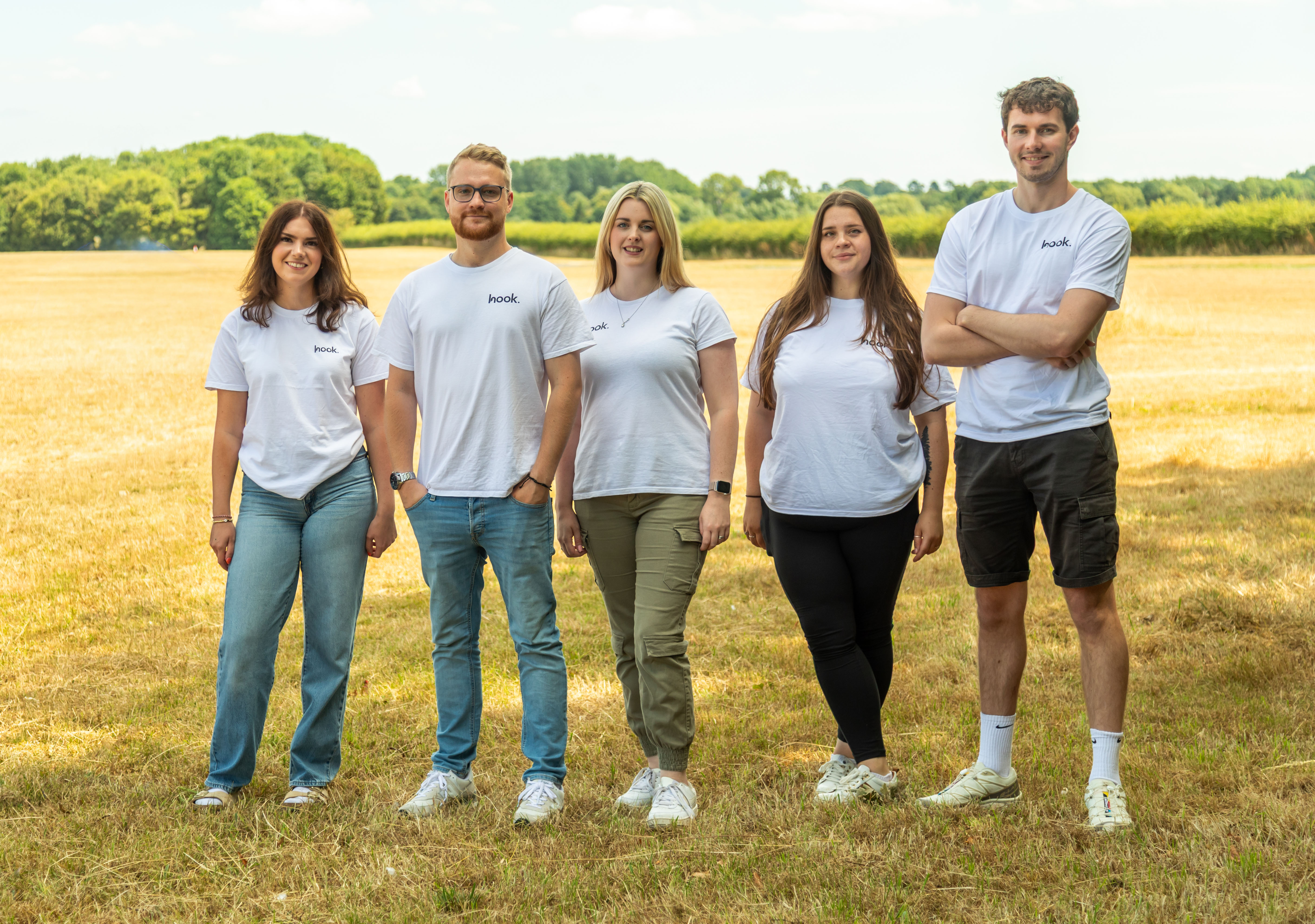
Hook-digital is a full-service marketing agency based in Oxford. We handle branding, design, SEO, Google Ads, social media, and more, so you only need to talk to one team. If your current lead generation feels patchy or unpredictable, our branding and design services give your business the credibility that makes every tactic work harder. A strong brand identity is the foundation that makes inbound, outbound, and referral tactics all perform better. Get in touch with Hook-digital to discuss a lead generation approach built around your goals.
FAQ
What are the main types of lead generation tactics?
The five core types are inbound, outbound, content-led, referral-based, and account-based marketing. Each suits different budgets, deal sizes, and buyer behaviours.
Which lead generation tactic has the lowest cost per lead?
Referral-based lead generation has the lowest median cost per lead at approximately £70, and it also produces the highest conversion rates of any channel.
How does inbound lead generation differ from outbound?
Inbound attracts buyers who are already searching, with a close rate of around 14.6%. Outbound initiates contact with prospects who have not yet expressed interest, at a higher cost and a close rate of around 1.7%.
When should a business use account-based marketing?
ABM is best suited to businesses pursuing high-value enterprise contracts, as it delivers deal values 2.4 times larger than standard lead generation methods, justifying its higher cost per lead.
How many lead generation channels should a business use?
Starting with two channels and measuring cost per lead alongside lead quality is the most practical approach. Adding a third channel once the first two are performing gives the best return without spreading resources too thin.
Recommended
- Why Blogging is Key to Generating Leads | Hook Digital - Oxford’s Premier Full-Service Marketing Agency
- Marketing Trends to Watch in February 2026 | Hook Digital - Oxford’s Premier Full-Service Marketing Agency
- Marketing tools for small business owners: 2026 guide | Hook Digital - Oxford’s Premier Full-Service Marketing Agency
- Types of digital marketing channels: 2026 guide | Hook Digital - Oxford’s Premier Full-Service Marketing Agency
.png)


