

.webp)

.svg)
Why social media builds customers: a practical guide
Social media builds customers by collapsing the distance between discovery and purchase, turning passive scrollers into active buyers through community, conversation, and commerce. The core mechanisms are straightforward:
- Brand discovery accelerated: platforms surface your content to people who have never heard of you, based on their existing interests and behaviour.
- Sales funnels shortened: social commerce and real-time engagement reduce the steps between “I’ve seen this” and “I’ve bought this.”
- Trust built at scale: two-way conversations replace one-way broadcasts, and customers who feel heard are far more likely to return.
- Data gathered continuously: every like, comment, and share tells you something about what your audience wants next.
For UK business owners and marketing professionals, the importance of social media for business has never been clearer. A 2026 global survey found that 83% of marketers cited increased exposure as a direct benefit, with 62% reporting generated leads. Those are not vanity metrics. They represent real pipeline.
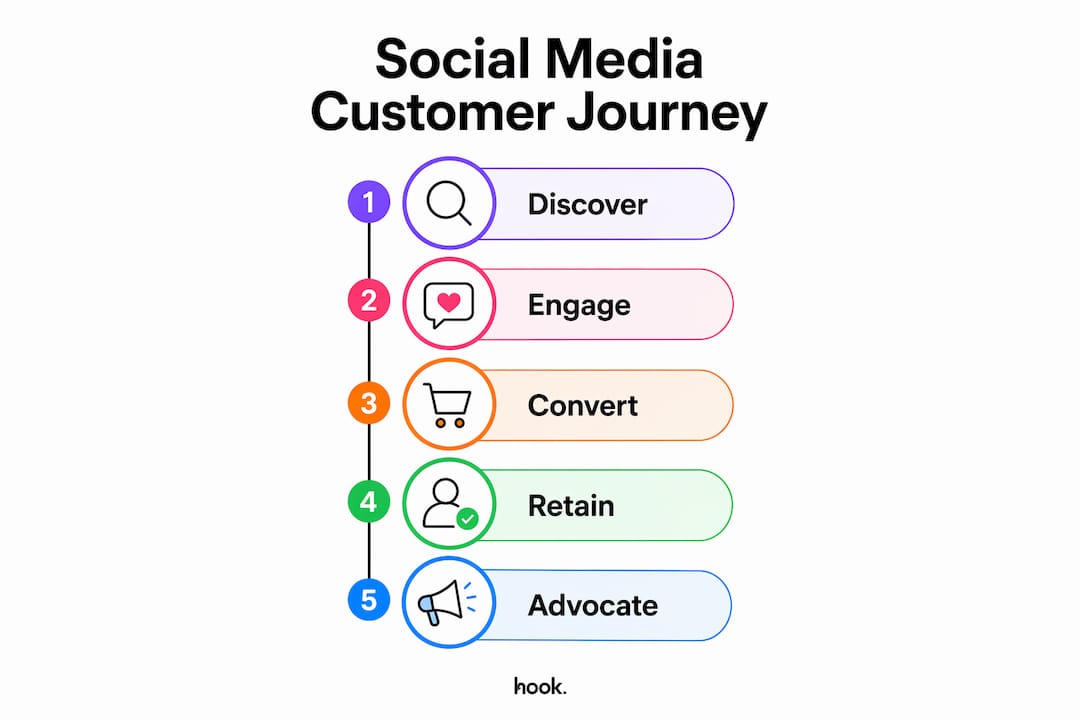
How social media builds genuine customer relationships
The brands that grow fastest on social media are not the ones posting most often. They are the ones treating every comment, message, and mention as a conversation worth having. Customer engagement on social media requires timely, personalised interaction to convert followers into loyal customers, and that distinction separates brands that accumulate followers from those that build actual communities.

Community building works because it creates habitual engagement. When your audience feels part of something, they return without being prompted. They tag friends, share posts, and defend your brand in comment sections. That kind of advocacy is worth far more than any paid placement.
Your social media team is also your brand’s front line for feedback and crisis response. They hear complaints before they escalate, spot trends before they peak, and can turn a frustrated customer into a loyal one with a single well-timed reply. Think of them less as content publishers and more as relationship managers who happen to work in public.
Pro Tip: Set a response-time target for social media messages, ideally under two hours during business hours. Customers who receive a fast, helpful reply are significantly more likely to make a purchase and recommend your brand to others.
Learning how businesses use social media for marketing effectively often comes down to this shift: from broadcasting to listening. The brands that make that shift earliest tend to build the most durable customer bases.
What social media data tells you about your customers
Social media platforms generate a continuous stream of real-time consumer behaviour data, and most businesses are not using it anywhere near as well as they could. Brands that use social listening convert platform activity into genuine business intelligence, identifying customer pain points that drive product and service improvements before competitors even notice the problem.
The practical applications are wide-ranging:
- Content strategy: see which posts generate saves and shares, not just likes, to understand what your audience genuinely values.
- Product development: monitor conversations about your category to spot unmet needs or recurring frustrations.
- Customer service: identify common complaints early and address them proactively, rather than reactively.
- Competitor gaps: track what customers say about alternatives in your market to find positioning opportunities.
Tools like Sprout Social translate raw platform data into structured reports, making it easier to spot patterns across channels and act on them quickly. The speed advantage is real. A brand that spots a trending topic on a monday morning and publishes relevant content by tuesday afternoon will consistently outperform one that waits for a monthly analytics review.
| Data type | What it tells you | How to act on it |
|---|---|---|
| Engagement rate | Which content resonates most | Produce more of what works |
| Sentiment analysis | How customers feel about your brand | Address negatives, amplify positives |
| Audience demographics | Who is actually following you | Refine targeting and messaging |
| Share of voice | Your visibility versus the wider market | Identify growth opportunities |
| Trending topics | What your audience cares about right now | Create timely, relevant content |
Smarter business decisions come from acting on this data consistently, not just collecting it. The brands winning on social media treat their analytics dashboards as a product-development tool, not just a marketing report.
Does social media actually help your SEO?
Yes, and the mechanism is more direct than most people realise. Social media strengthens SEO indirectly through increased brand visibility, backlink opportunities, and accelerated content reach. When a post goes wide, it generates traffic to your website, signals to search engines that your content is worth surfacing, and often earns links from journalists or bloggers who discover your brand through social channels.
Answer Engine Optimisation (AEO) is the newer layer of this. As AI-powered search tools like Google’s AI Overviews and Perplexity pull answers from across the web, brands with consistent, authoritative social presences are more likely to be cited. Your social content contributes to the body of evidence that these systems use to assess your credibility.
Key SEO and discovery benefits of an active social presence:
- Increased branded search volume as more people look you up after seeing your content.
- More inbound links as your content gets shared and cited by other sites.
- Faster indexing of new content, since Google crawls heavily shared pages sooner.
- Improved local discovery, particularly for UK businesses using location-tagged posts and geo-targeted ads.
- Platform-native search visibility on Instagram, TikTok, and LinkedIn, where users search for products and services directly.
Pro Tip: Write social captions the way people search, not the way brands talk. A caption that answers a real question (“How do you choose a marketing agency in Oxford?”) is far more likely to surface in both platform search and AI-generated answers than one that simply promotes a service.
A well-executed social media strategy treats SEO and social as complementary, not separate. The content you create for one channel almost always strengthens the other.
How social media protects your brand when things go wrong
Speed is everything in a crisis, and social media gives you a direct line to your customers the moment a problem surfaces. Real-time crisis communication on social media can prevent brand damage and maintain customer trust in ways that a press release or email newsletter simply cannot match.
The brands that handle crises well on social media share a common approach: they acknowledge the issue quickly, communicate what they are doing about it, and update their audience as the situation develops. They do not go quiet and hope the problem disappears. Silence on social media reads as guilt or indifference, and customers notice.
Active social listening is what makes this possible. Brands that monitor mentions, hashtags, and sentiment in real time can spot a brewing issue before it trends, giving them a window to respond proactively rather than defensively. That window is often the difference between a contained incident and a viral story.
Reputation also directly affects customer acquisition. Prospective customers routinely check a brand’s social profiles before making a purchase decision. A history of responsive, transparent communication is a trust signal that no amount of advertising spend can replicate.
Social commerce: turning engagement into actual revenue
Social commerce is the most direct answer to why social media builds customers in commercial terms. Platforms including Instagram, TikTok Shop, and Facebook Shops now allow users to browse, select, and purchase without ever leaving the app. That frictionless path from discovery to checkout converts engagement into sales at a rate that traditional e-commerce funnels struggle to match.
Remarketing is the other engine here. A user who watches your product video but does not buy immediately can be retargeted with a follow-up ad, a discount, or a customer review that addresses their hesitation. That combination of initial engagement and intelligent follow-up is what turns interest into revenue.
Effective social commerce tactics include:
- Shoppable posts: tag products directly in Instagram or Facebook posts so users can purchase in two taps.
- Influencer collaborations: partner with creators whose audiences match your customer profile for trusted, native promotion.
- Limited-time offers: use Stories and short-form video to create urgency around promotions.
- User-generated content: encourage customers to post about your products, then reshare that content as social proof.
- Retargeting campaigns: serve ads to users who have engaged with your content or visited your website but not yet converted.
According to a 2026 global survey, 62% of marketers reported that social media directly generated leads for their business, with 46% citing improved sales as a measurable outcome.
The impact of social media on sales is no longer theoretical. For UK businesses with the right setup, social platforms function as a fully integrated sales channel, not just a marketing one. If you want to understand the broader picture of how marketing transforms your business, social commerce is one of the clearest examples.
What UK marketing experts say about social media’s customer-building power
The academic and professional consensus on social media’s role in customer growth points to one consistent theme: relationships, not reach, drive results. Leading brands treat social media as a two-way engagement platform, prioritising authenticity over volume.
Social Exchange Theory offers a useful framework for understanding why this works. When a brand consistently provides value through helpful content, responsive service, and personalised interaction, customers reciprocate with loyalty and advocacy. Research applying this theory to social media marketing shows that valued brand exchanges increase engagement, trust, and long-term relationship equity. Put simply: give people something worth their time, and they will keep coming back.
Key insights from marketing research:
- A human-first approach to social media, prioritising genuine interaction over promotional content, is the strongest predictor of trust and conversion.
- Brand image consistency across platforms influences online purchase intent more than reach alone.
- High engagement does not automatically mean high sales. Effective social selling requires personalised interactions that build trust before asking for a commitment.
- In mature digital markets, user-generated content and brand image carry more weight in purchasing decisions than paid advertising trust.
For UK businesses working with a marketing coaching partner or building an in-house team, these principles translate into a clear brief: invest in quality interactions, maintain visual and tonal consistency, and measure relationship depth, not just follower count.
Ready to put this into practice?
Understanding why social media builds customers is one thing. Executing it consistently, across the right platforms, with the right creative and the right strategy, is where most businesses need support.

Hook-digital works with UK businesses to build social media presences that actually convert. From branding and design that makes your content stop the scroll, to full social media management and paid campaigns, the team handles everything under one roof. No coordinating between multiple agencies. No briefing the same thing twice.
Get in touch with Hook-digital to find out how a joined-up social and web strategy can turn your platforms into a genuine customer-building engine.
Key takeaways
Social media builds customers by combining community trust, real-time data, and direct commerce into a single, always-on channel that shortens the path from discovery to purchase.
| Point | Details |
|---|---|
| Community drives loyalty | Brands that engage authentically build habitual return visits and word-of-mouth advocacy. |
| Data informs every decision | Social listening tools reveal customer pain points and content preferences in real time. |
| Social media supports SEO | Increased brand visibility and content sharing generate backlinks and accelerate search indexing. |
| Commerce is now native | Shoppable posts and retargeting convert engagement into sales without leaving the platform. |
| Relationships outperform reach | Social Exchange Theory shows that valued interactions build trust and long-term loyalty. |
FAQ
How does social media attract customers?
Social media attracts customers by surfacing your content to people based on their interests and behaviour, acting as a discovery engine for brands. Platforms recommend relevant content algorithmically, meaning your posts can reach prospective customers who have never searched for you directly.
What are five reasons why social media is good for business?
Social media increases brand exposure, generates leads, drives website traffic, builds customer loyalty, and improves sales. A 2026 global survey found that 83% of marketers cited increased exposure and 62% reported generated leads as direct benefits.
How does social media shorten the sales funnel?
Social commerce features such as shoppable posts and in-app checkout remove the steps between discovery and purchase, while retargeting re-engages users who showed interest but did not convert immediately.
Why does brand image matter so much on social media?
Consistent tone and visuals across your social profiles directly influence purchase intentions. Research shows that brand image mediates the effect of social media communication on consumer behaviour, making consistency a commercial priority, not just an aesthetic one.
How do you measure whether social media is actually building customers?
Track metrics beyond follower count: engagement rate, sentiment, share of voice, and conversion from social traffic. Tools like Sprout Social translate these into structured reports that connect social activity to business outcomes.
Recommended
- Develop a social media strategy that actually works | Hook Digital - Oxford’s Premier Full-Service Marketing Agency
- How Can Businesses Use Social Media for Marketing | Hook Digital - Oxford’s Premier Full-Service Marketing Agency
- A Practical Guide for Businesses and Brands Considering Google Ads | Hook Digital - Oxford’s Premier Full-Service Marketing Agency
- How AI can revolutionise social media and marketing for small businesses | Hook Digital - Oxford’s Premier Full-Service Marketing Agency
.png)


